

Ordering glasses online saves a lot of money. What stops most people is a simple worry: you can’t try them on, so how do you know they won’t turn up looking ridiculous?
The reassuring answer is that the hard part is already solved. Glasses are sized like shoes, and your size is printed inside the pair you’re wearing right now. Once you know where to look, you’re not guessing at all.
Here’s how to find your size, what the options at checkout actually mean, and which ones you can safely ignore.
Table of Contents
Start With the Glasses You Already Own
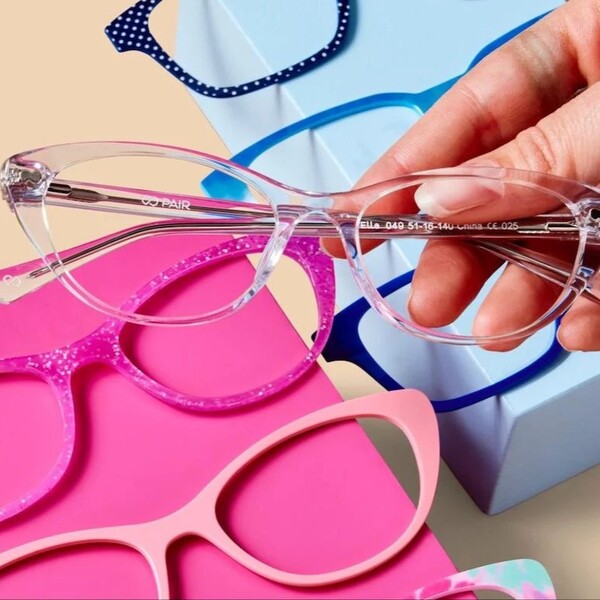
Somebody has already measured you. Take off the pair you wear most and look at the inside of one of the arms.
Among the small print, you’ll find three numbers in a row, something like 51-17-140. Those are your sizes in millimeters.
- The first number is how wide one lens is.
- The second is the gap that sits over your nose.
- The third is the length of the arm, from the hinge to the back of your ear.
Write them down. Any frame with numbers within one or two of yours will sit on your face the same way your current glasses do, which is the closest thing to trying before buying that exists.
If you can’t find them on the arm, check the inside of the bridge. And if the pair you own has never felt right, skip ahead, because copying a bad fit gets you another bad fit.
How to Work Out Your Size From Scratch

If you have no glasses to copy, you can measure your own face in about a minute.
- Stand in front of a mirror, looking straight ahead.
- Press an index finger flat against each side of your face, level with your eyes, right at the edge.
- Measure from the outside of one finger across to the inside of the other.
That’s your target frame width. The idea is that glasses should be a touch wider than your face, so they rest on it rather than gripping it, with your eyes sitting in the middle of the lenses rather than crowded toward the inner edge.
Getting this wrong is the most common reason online glasses feel wrong, and each mistake has its own symptom:
- Too narrow, and the arms are squeezed. You’ll feel it above your ears after an hour or two, and you’ll find marks there at the end of the day.
- Too wide and they slide. All day, down your nose, forever. This is the one people complain about most.
The Bridge and Why Glasses Slide Down

If glasses have always slipped down your nose, the size probably isn’t the problem. The bridge is.
Look at your nose from the side and notice where it starts. Some people’s noses begin high, level with the eyes. Others start lower down. Frames are built for one or the other, and wearing the wrong kind is what causes the sliding, the constant pushing-back-up, and the red marks.
What you’ll see offered:
- Standard bridge. One continuous piece across the nose. Fine for most people with a higher nose bridge.
- Low-bridge fit. Built for noses that start lower, which is common across many Asian and other facial structures. If glasses have always sat badly on you, this is very often the fix.
- Adjustable nose pads. Little pads on bendable arms, usually on metal frames. The most forgiving option, because you can nudge them until they’re right.
It’s worth a minute of thought. People replace perfectly good glasses because of this and never work out why they didn’t get on with them.
How to Choose a Glasses Shape That Suits You
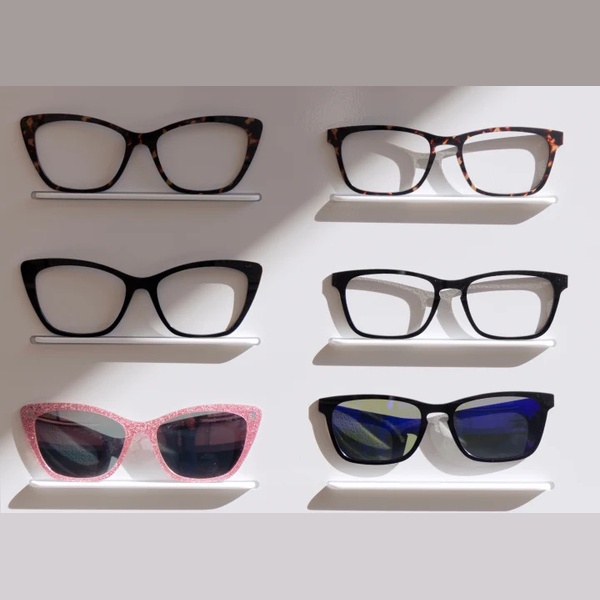
Shape feels like the subjective bit, and mostly it isn’t. The principle is contrast: soft frames flatter angular faces, and angular frames flatter soft ones.
- Round or oval face. Square and rectangular frames give definition.
- Square or heart-shaped face. Round, oval, or cat-eye frames soften a strong jaw or brow.
- Longer face. Deeper frames with more height break up the length.
- Narrow forehead or chin. Cat-eye and browline shapes add width where you want it.
Two things matter more than the shape itself. One, the frame should be at least as wide as the widest part of your face. And two, the top of the frame should follow your brow line rather than floating above it or cutting across it.
Beyond that, trust yourself. Good retailers list which face shapes each frame suits, so you can narrow things down without having to develop opinions about eyewear.
Acetate, Metal, or a Bit of Both?
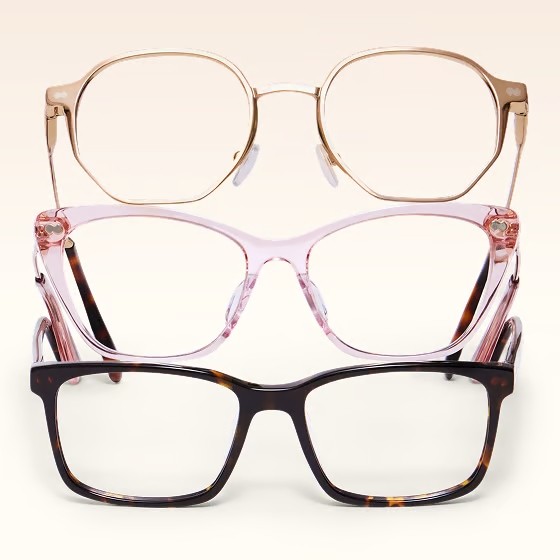
Material changes how glasses feel after six hours, not just how they look.
- Acetate is the thicker plastic used for tortoiseshell and bold colors. Warm against your skin, holds color well, and the chunkier rim hides the edge of a strong lens better than a thin frame does.
- Metal is lighter and less noticeable on your face. Titanium is the lightest of the lot and doesn’t corrode. Metal frames usually come with adjustable nose pads, which make them the easiest to get comfortable with.
- Mixed is an acetate front with metal arms or trim. A little smarter than plain acetate, without the coolness of all-metal.
One thing almost nobody checks is how it decides how long the glasses last. Hinges are what fail first, because you open and fold them twice a day, every day, for years. Eventually, the arms go loose and splay outward. A hinge with more interlocking barrels grips over a larger surface and stays tight for much longer, so if a frame mentions a five-barrel hinge, that’s a real reason to pay a bit more.
Which Type of Lenses Do You Need?
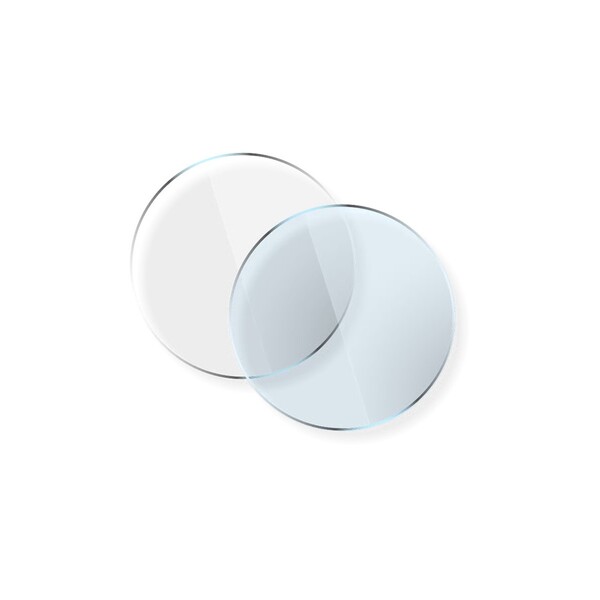
Your eyes decide this, not your budget.
- Single vision. One correction across the whole lens, for either distance or reading. Most people are under forty.
- Readers. Close-up only, for people whose distance vision is fine.
- Progressives. Near, middle, and far in one lens, no visible line. What you need when close focus starts to go, usually in your forties. They take a week or two to get used to.
- Bifocals. The old two-zone version with a line across the lens. Cheaper, and largely replaced by progressives.
If you’re going for progressives, one thing will catch you out. The lens needs enough height to stack three zones of vision, so very shallow, narrow frames physically can’t take them. Around 30mm of lens height is the usual minimum. Check that before you fall for a shape.
The One Lens Upgrade Worth Understanding

Thinner lenses cost more, and whether you need them depends on one number in your prescription.
Here’s the short version: if your prescription is milder than about +3.00 or -6.00, you can skip this and put the money into the frame instead. Standard lenses will look completely normal on you.
Above that, it’s worth paying. A strong prescription in a standard lens makes a thick edge that sits proudly of the rim, noticeably magnifies or shrinks your eyes to anyone looking at you, and adds real weight to the front of the frame. Thinner lens material fixes all three, and the stronger your prescription, the bigger the difference.
Two small things that help either way. A chunkier acetate frame disguises a thick lens edge far better than a delicate metal one. And anti-reflective coating matters more on thin lenses, because they reflect more light.
The Other Add-Ons, and Which You Can Skip
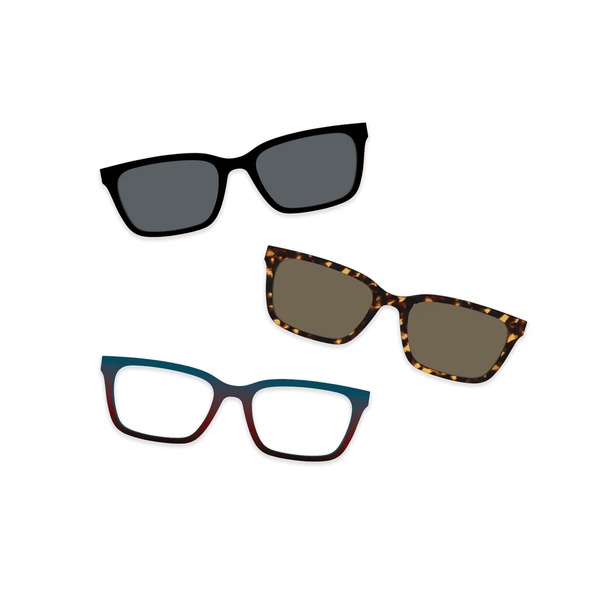
You’ll be offered a handful of upgrades at checkout. Most people need one or two of them, not all.
- Anti-reflective coating. Take it. It cuts glare, and it’s the difference between people seeing your eyes and seeing two white discs. Often included for free.
- Scratch-resistant coating. Usually included as standard. Nothing to decide.
- Blue-light filtering. Worth considering if you spend your whole day on screens. The evidence on eye strain is mixed, but plenty of heavy users say evenings feel easier.
- Light-responsive lenses. Darken outdoors, clear indoors. Genuinely useful if you’re in and out a lot. One caveat: most types barely react behind a car windscreen, so they’re not a driving solution.
- Anti-fatigue. A gentle boost in the lower part of the lens for close work. For people who are on screens all day and don’t yet need progressives.
If you’re not sure, the honest answer is that anti-reflective is the one that improves every pair, and the rest depend entirely on how you spend your day.
Getting Prescription Sunglasses
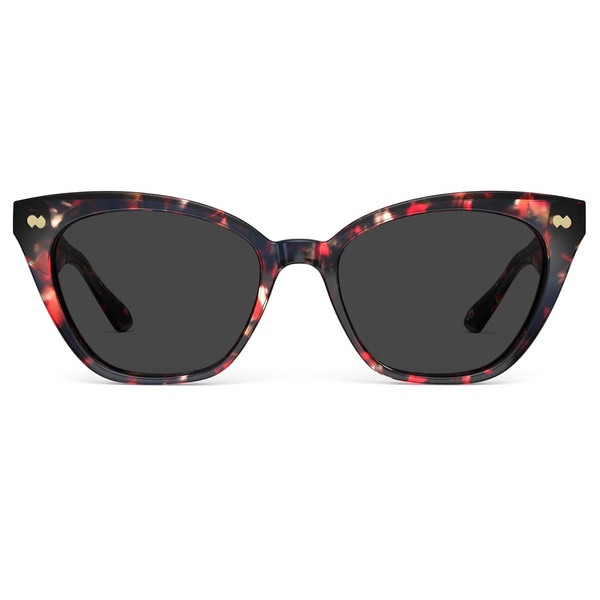
Two ways to do it, and the right one depends on your routine rather than your prescription.
A dedicated pair of prescription sunglasses suits anyone who’s outdoors for long stretches. Look for polarization, which cancels the glare bouncing off roads and water, and full UV protection. Those are different things, and you want both.
Clip-ons or magnetic fronts go over the glasses you already own. Cheaper, and they live in your bag instead of needing a second frame, so they suit people who are in and out all day. Magnetic ones are quicker and don’t touch your lenses.
One thing worth knowing: dark lenses without UV protection are worse than no sunglasses at all, because the tint makes your pupils open wider and let more in.
Before You Click Buy
Five things to have ready:
- Your prescription, still in date.
- Your PD, or pupillary distance. It’s the gap between the centres of your pupils, and it tells the lab where to position each lens. Get it wrong and you can end up with headaches even though the prescription is perfect. It’s often on your prescription, and your optometrist will have it.
- The three numbers from your current glasses, or the width you measured.
- Your FSA or HSA card, if you have one. Prescription glasses are an eligible expense.
- Your vision insurance details, if your plan reimburses out-of-network.
Then check three things on the site itself before paying:
- How many measurements they publish. Three is the minimum. Five, including lens height, means you can actually check a frame will work.
- Whether there’s a virtual try-on, and whether it uses your camera live rather than pasting frames onto a photo.
- The returns window, and who pays return postage.
That last one matters more than anything else here. However well you measure, a frame can still look wrong on you, and a proper returns policy turns buying online from a gamble into a low-risk errand.
How to Get Started With Pair Eyewear
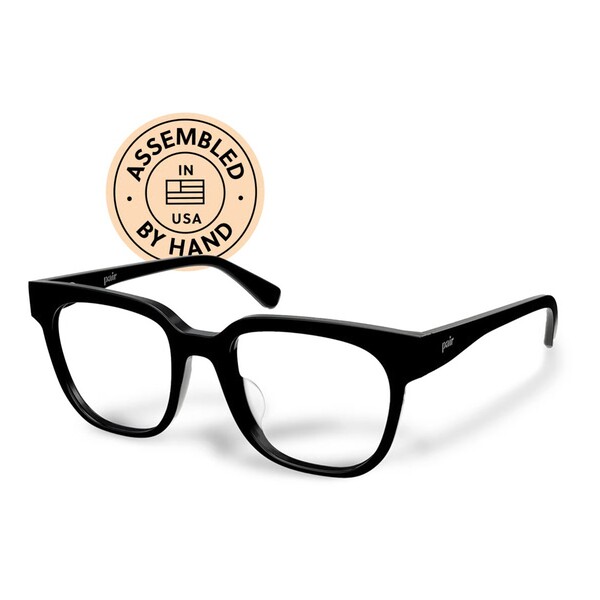
You’ve got your three numbers and a rough idea of the shape you want. Here’s how that turns into an actual order at Pair Eyewear.
1. Narrow down to the frames that fit before you look at a single style.
Pair publishes five measurements on every frame instead of the usual three, so lens height and total frame width are both there for checking. You can also filter the catalogue in two ways that matter:
- By width, from extra-narrow through to extra-wide
- By bridge type, including a low-bridge option for noses that start lower down
Do that first, and you’ll go from hundreds of frames to maybe a dozen. Everything after this is choosing between glasses that will definitely fit, which is a much nicer problem than the one you started with.
2. Now let yourself care what they look like.
Every frame page names the face shapes it suits. The Larkin, a narrow rectangle, is listed for oval and round faces. The Harper, a wide cat-eye, for oval, round, heart, diamond, and triangle. If you’d rather not think about it, a short quiz asks a few questions and hands you a shortlist.
3. Pick your material, which is really picking your price.
- $60, Sunset. Discontinued colors of existing shapes, sold at the final sale. The cheapest way into a frame you like the shape of.
- $80, acetate. The default, and where most people land.
- $90, mixed material. An acetate front with metal detailing. A little dressier.
- $110, Forte. Sculpted acetate with a five-barrel hinge. More on this below.
- $130, metal. Titanium fronts and adjustable nose pads. The one to pick if glasses have never quite sat right on you.
4. Add your prescription, whichever way is easiest.
Three options, and none of them hold up your order:
- Upload a photo of it
- Have Pair ring your optometrist and get it directly
- Skip it for now and send it on later
Single-vision readers and non-prescription lenses are included in the frame price you just picked, along with anti-reflective and scratch-resistant coatings.
5. Skip most of the lens upgrades.
Here’s where sites usually get expensive, so this is what’s worth your money and what isn’t:
- Thinner lenses, from $39. Only if your prescription is above +3.00 or below -6.00. Pair publishes that threshold rather than upselling everyone, so if you’re milder than that, you’re done here.
- Progressives, $199. For when you need near, middle, and far in one lens.
- Blue-light filtering, $49. Worth considering if you spend your whole day on screens.
- Light-responsive, $149. Darken outdoors, clear indoors. Useful if you’re in and out a lot.
6. Decide about sunglasses.
- Polarized prescription sun lenses, $99, into any frame. A proper second pair, best for long days outdoors.
- Magnetic Sun Tops, from $35, clip over your everyday glasses. Better if you’re in and out all day. The polarized ones are labelled as such.
7. See them on your face before you commit.
The virtual try-on runs in your browser using your camera, requires no installation, and lets you flick through every color of a frame. It covers the base frames rather than the magnetic tops. There’s no mail-out home try-on, so the returns window does that job instead.
Then it’s mostly out of your hands.
- Your PD is requested by email after you order, along with a phone camera tool to measure it if your optometrist didn’t give you one. Send it back quickly, because nothing reaches the lab until it arrives.
- FSA and HSA cards are accepted, since prescription eyewear is an eligible expense.
- Orders take five to seven working days to make, then another five to seven to arrive.
- Returns are free and run for a full 30 days from delivery, either by post or dropped off at a collection point.
Four of those five frame tiers come down to how a frame looks and what it weighs. The fifth is answering a different question, and it’s the one the hinges came up in earlier.
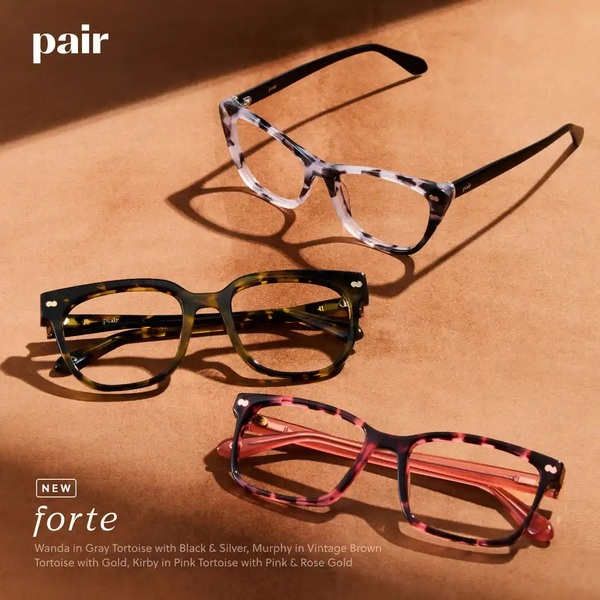
The Pair Eyewear Forte Collection: Sculpted Acetate and a Hinge Built to Last
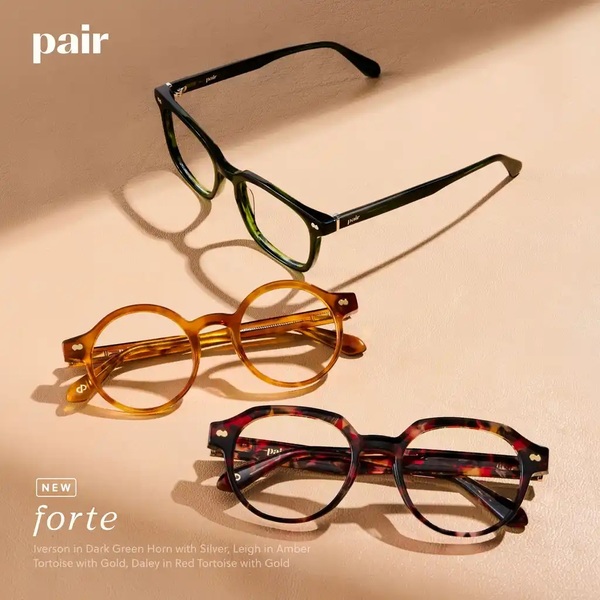
Some people replace their glasses because they’ve gone off the look. Plenty of others replace them because the arms have gone soft, nothing sits straight anymore, and pushing them back up their noses has become a reflex. Forte is the collection Pair built for the second group.
It’s the premium end of the acetate range, and the difference starts with how the material is cut. Pair describes it as “carefully sculpted, beveled acetate and polished metal accents. With a 5-barrel, anti-wear hinge, these Base Frames are exceptionally comfortable and stand the test of time.” The acetate is hand-polished and bevelled rather than cut flat, which is what gives the edges their depth, and every colourway pairs acetate with a metal finish.
The hinge is the part that decides how the frame ages:
- Five interlocking barrels spread the load across more contact surface than a standard hinge
- The joint keeps its grip long after a cheaper one has loosened and lets the arms splay outward
- None of it is visible from the outside, which is why it almost never makes a buying decision and probably should
Five shapes were drawn for Forte specifically, and each page lists the faces it suits:
- The Flora, a wide butterfly cat-eye, for oval, round, heart, square, diamond, or triangle faces
- The Daley, a wide round, oval, square, or oblong
- The Evelyn, a wide oversized square, for oval, heart, oblong, or triangle
- The Iverson, a wide square, for oval, heart, oblong, or triangular
- The Leigh, a medium round, oval, square, or oblong
Three existing Pair shapes also come in a Forte version: the Kirby, the Murphy, and the Wanda. The measurements are identical across all three tiers, so if one of those already fits you, moving up to Forte gets you the better hinge and the sculpted finish without changing how the frame sits on your face.
The colors lean warm and traditional, like the Evelyn in Vintage Brown Tortoise with Gold, the Flora in Amber Tortoise with Gold, or the Iverson in Dark Green Horn with Silver. And like everything else in the range, Forte frames take the magnetic top frames, so the frame you bought to last still changes its look whenever you want.
Forte frames are $110, putting them between the mixed-material frames at $90 and the metal at $130. Thirty dollars over standard acetate is an unglamorous thing to spend on a hinge, and it’s the part of the frame most likely to decide how long you keep it.
Final Thoughts
It comes down to three numbers and four choices. The numbers are already printed inside the glasses you’re wearing. The choices are width, shape, material, and lenses, and each one has a sensible answer rather than a matter of taste.
Measure first. Narrow down the frames that fit before you start looking at styles, because a beautiful frame in the wrong width is still the wrong frame. And leave the lens upgrades until last, when you can see which ones apply to your prescription rather than to everyone’s.
Then buy from somewhere that shows you the numbers and gives you a month to change your mind. That covers everything else.
Explore your options for eyewear with these top brands:


Ask the community or leave a comment
WRITE A REVIEWCustomer Reviews
Leave a review