
Table of Contents
Protect your health and home from wildfire smoke
Smoke doesn’t respect distance. You don’t have to live anywhere near a wildfire zone to spend a week breathing one. The EPA’s wildland fire research puts the reach at hundreds, and sometimes thousands, of miles, and NASA reports that major wildfires have more than doubled over the past 20 years. Today that means a fire burning three states away can push the air quality where you live from green to purple inside a day, and the first sign for most households is the smell in a room where every window is already shut.
Preparation stopped being a regional concern somewhere in there.
The useful version of that preparation isn’t a shopping spree. It’s a short list of equipment that public health agencies actually recommend, set up before the sky turns orange rather than during. Six things to put on your preparation list, with what each costs and where the guidance comes from.
What’s Actually in Wildfire Smoke
What’s in the air explains why some equipment helps while other equipment doesn’t.
The EPA, the California Air Resources Board, and the California Department of Public Health describe wildfire smoke in their joint guide for public health officials as “a complex mixture of particulate matter, carbon dioxide, water vapor, carbon monoxide, hydrocarbons and other organic chemicals, nitrogen oxides, and trace minerals.”
Four parts of that mixture matter at home, and they don’t all respond to the same equipment.
1. Ash and soot, 0.01 to 10 microns
Partially visible and entirely inhalable. Larger particles settle on cars and windowsills while millions of smaller ones stay airborne. A pre-filter catches the coarse end, and HEPA takes the rest.
2. Fine particles, or PM2.5
The agencies are direct about which component carries the risk: “Particulate matter is the principal public health threat from short- and longer-term exposure to wildfire smoke,” and roughly 90% of the particle mass wildfires emit is this size. The EPA notes that these reach “the lower respiratory tract, including the alveolar region,” and that some then translocate “to the blood, where they can affect other organ systems, such as the heart.” A lung irritant with cardiac consequences. HEPA handles them.
3. Toxic gases, no particle size at all
Burning trees releases carcinogenic volatile organic compounds, including benzene and formaldehyde, as well as carbon monoxide. Gases have no particle size, which is the whole problem: HEPA-only purifiers pass them straight through. Carbon is the stage that captures them.
4. Smoke odor, also gas phase
A HEPA-only machine can leave a room measurably cleaner and still smelling like a stale campfire. Air fresheners add to the chemical load rather than clear it. Carbon again.
One more property argues for filtration far from any fire. Research published through the European Commission’s Horizon program found that smoke oxidizes as it ages and travels, becoming more toxic in the process. The plume arriving over a city days downwind is chemically different from the one that left the fire and not in a reassuring direction.
A number that gets misread constantly: 0.3 microns is not a filter’s lower limit. The EPA explains that in HEPA testing, “the diameter specification of 0.3 microns corresponds to the worst-case, the most penetrating particle size,” and that “particles that are larger or smaller are trapped with even higher efficiency.” Filters get better below 0.3 microns, not worse.
What Smoke Exposure Feels Like
Households underreact to smoke partly because the early symptoms read as something else. A scratchy throat in August gets blamed on allergies.
Initial and early exposure may look like sore throat, burning eyes, coughing and phlegm, headache and fatigue, wheezing, even difficulty breathing. With prolonged or repeated exposure, the list can get more serious, running through asthma attacks and COPD flare-ups, worsening of existing heart and lung conditions, cardiovascular events, emergency department visits, and premature death, among the most at-risk.
Another serious concern that deserves more attention is the link between wildfire smoke exposure and decreased cognitive function and effects on mental health and well-being. A bad smoke week shows up in how people think, not only in how they breathe.
The EPA names who should be most careful: children, older adults, pregnant women, people with heart or lung disease, and outdoor workers. The joint public health guide adds people of low socioeconomic status, a category reflecting housing quality and the kind of work people do.
Worth stating plainly: there’s no exposure level to wildfire smoke that counts as safe. The goal isn’t a threshold; it’s less.
How to Read the Air Quality Index
The AQI is an easier indicator to understand the seriousness of poor air quality. AirNow publishes six bands.
- 0 to 50, Good, green. Little or no risk.
- 51 to 100, Moderate, yellow. A risk for people “unusually sensitive to air pollution.”
- 101 to 150, Unhealthy for Sensitive Groups, orange. “Members of sensitive groups may experience health effects. The general public is less likely to be affected.”
- 151 to 200, Unhealthy, red. “Some members of the general public may experience health effects.”
- 201 to 300, Very Unhealthy, purple. “Health alert: The risk of health effects is increased for everyone.”
- 301 and above, Hazardous, maroon. “Health warning of emergency conditions.”
Orange is the split point, the first band where sensitive groups are affected and most people aren’t. Red is where healthy adults start to feel it. Purple and maroon drop the distinction.
The 6 Things Worth Having to Be Prepared for Wildfire Smoke
#1: AirDoctor UltraHEPA Air Purifiers, Full Coverage for All Four Parts of Smoke
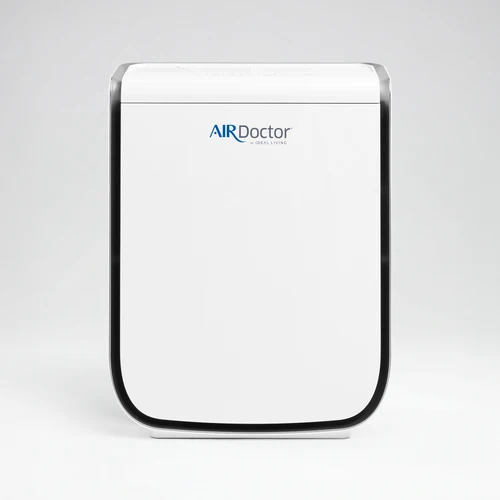
The single most useful piece of equipment, and the one that needs the most thought, because smoke is four problems and plenty of purifiers solve two.
Particles are a filtration job. Gases are an adsorption job, and that means carbon in quantity. The California Air Resources Board is specific: HEPA filters “are very useful for removing particles but cannot remove gases,” while “larger quantities of activated charcoal are more effective than small quantities and will last longer.”
AirDoctor is built around exactly that split, which is why it leads this list. The brand started in Southern California, where fire season has been part of the calendar for decades. Its carbon stage is where it sets itself apart: rather than a thin sheet, all models use what AirDoctor describes as “activated carbon with potassium permanganate for real protection against gases and VOCs.” Potassium permanganate oxidizes gases that carbon alone struggles to hold. The housing is sealed too, so air can’t slip around the filters and re-enter the room unfiltered, and a filter only cleans the air forced through it.
AirDoctor also reports that “97% of customers surveyed said they feel more confident knowing AirDoctor filters smoke from their indoor air, including wildfire smoke,” drawn from an email survey of 775 customers.
Highlights
- Three stages on every model: pre-filter, Premium Carbon/VOC filter, and UltraHEPA
- UltraHEPA rated by AirDoctor to capture 99.99% of particles down to 0.003 microns, 100 times smaller than the HEPA standard
- Fully sealed housing, so air cannot bypass the filters
- PM2.5 sensor and auto mode on all models, with a halo light that shifts color as air quality changes and a fan that follows it
- Coverage quoted at 4 air changes per hour, the stricter of the two industry conventions
- Smoke CADR from 160 on the 1500 model up to 556 on the 5500 model. Choose from a line of models covering 285 to 1,043 sq ft
- The 4000 and 5500 run six fan speeds and drop to 28 dB, quieter than most bedrooms at night
- WiFi, and an app on every model except the 1500
Price
- AirDoctor 1500, $399.00
- AirDoctor 2000, $399.00
- AirDoctor 3500, $659.00
- AirDoctor 4000, $679.00
- AirDoctor 5500, $999.00
The warranty runs one year, extending to five years with an active filter subscription, and purchases carry a 30-day money-back guarantee.
#2: Temtop M10 Air Quality Monitor, Live Indoor PM2.5 Readings
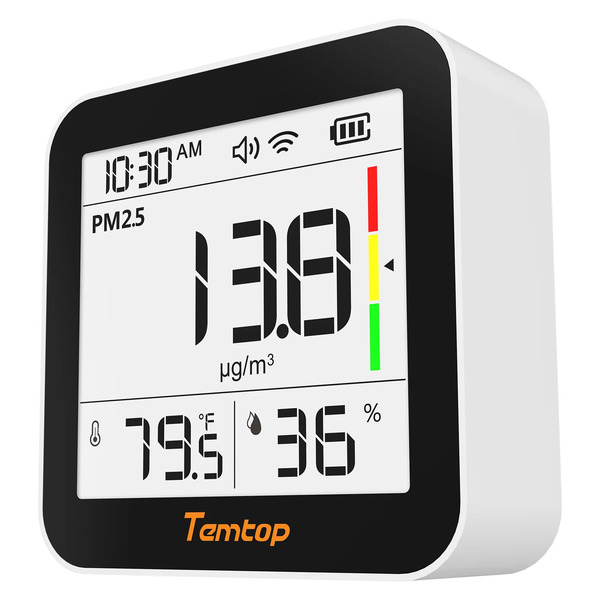
Decisions get easier with a number, and the useful number is the one inside the house.
The M10‘s job during a smoke event isn’t alarm; it’s feedback. It tells you whether the clean room is working, whether the purifier needs to move, and when it’s safe to open a window again.
For outdoor readings the EPA recommends the AirNow Fire and Smoke Map at fire.airnow.gov, and one detail there is worth knowing. Consumer sensors “have a bias, which means they regularly report a higher or lower amount of pollution than actually is in the air,” so the EPA applies “a scientific correction equation” before displaying them. A reading in a sensor’s own app is uncorrected. Check the map, not the app.
Highlights
- Reads PM2.5, formaldehyde, TVOCs, and an overall AQI on a desktop display
- Rechargeable and portable, so it can be carried from room to room to find the leaks
- Step-up M2000 adds PM10, CO2, data logging, and an audible alarm
- The PurpleAir Zen is the outdoor unit feeding the EPA’s map, reading PM1.0, PM2.5, and PM10
- The older PurpleAir Flex was discontinued in early 2026, so ignore listings still pushing it
Price
- Temtop M10, $79.99 · Temtop M2000 2nd Generation, $209.99
- PurpleAir Zen, $299.00, power adapter not included
#3: 3M Aura 9205+ N95 Respirator, NIOSH-Approved Protection Outdoors
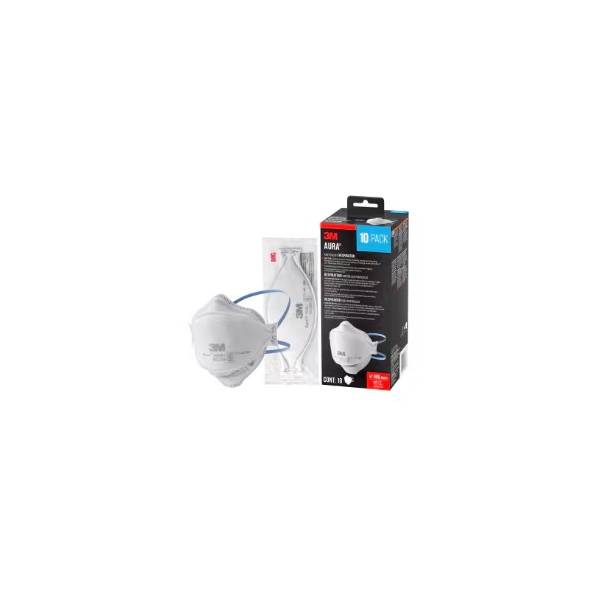
For trips outside, you can’t wait, and the item is most likely to sell out the week you need it.
NIOSH says to wear “a NIOSH Approved N95 or P100 respirator” and is equally clear on what fails: cloth masks, surgical masks, and bandanas, wet or dry, “are not designed to seal to your face and do not have the type of filter material that will filter out the smoke particles.”
Fit decides everything. NIOSH says “both straps must be positioned properly, the noseclip must be formed firmly, and the worker should be clean-shaven,” since “facial hair can cause tight-fitting respirators to leak.”
Highlights
- Minimum 95% filtration efficiency against solid and liquid non-oil aerosols, assigned protection factor of 10
- Three-panel flat-fold design with an adjustable nose clip and foam cushion
- Individually wrapped, five-year shelf life, so a box bought now covers several fire seasons
- 3M documents the NIOSH approval as TC-84A-8590
- Washington State’s health department notes N95s “filter out most fine particles in smoke but not harmful gases, such as carbon monoxide.”
- CARB adds that “those with lung or heart conditions should check with their doctor before using one”
Price
- $36.98 per box of 20, about $1.85 per mask
- P100 alternative: 3M Rugged Comfort 6502QL facepiece $54.89 plus a two-pair set of 2097 P100 filters $18.48, roughly $73 for the full setup
#4: Filtrete MA03DC-6 MERV 13 Filter, Whole-House Filtration Through Your HVAC
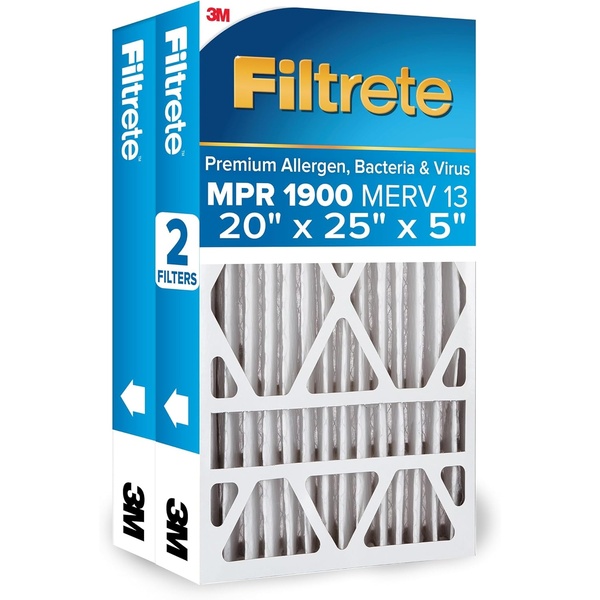
Portable purifiers clean a room. A central system cleans the house, and the filter in it decides how well.
The EPA is direct: “It is recommended to use a MERV 13 filter(s) to remove the very small particles in wildfire smoke,” with the qualifier “or as high as your system will accommodate.” Higher-rated filters restrict airflow, so check the blower’s rating first.
One labeling trap costs people money every fire season. MERV is the industry standard, MPR is 3M’s own scale, and FPR is Home Depot’s. The same MERV 13 filter reads as MPR 1900 on a Filtrete box and FPR 10 or 12 on a Home Depot one. Read the MERV number and ignore the rest.
Highlights
- MERV 13, the rating the EPA names specifically for wildfire smoke
- Electrostatic pleated media in the common 20x25x1 size
- Home Depot doesn’t stock Filtrete MERV 13 in that size online, so try Lowe’s, Walmart, or Target
- If the system pulls in fresh air, the EPA says to “turn it off, close the intake, or set the system to recirculate mode.”
- For evaporative coolers, cover “the outside air intakes with 4-inch-thick high-efficiency (MERV 13) furnace filters.”
Price
- Filtrete MA03DC-6, $23.97 for a single filter at Lowe’s
- Home Depot Simply Pleated MERV 13, $59.97 for six, about $10 each
#5: Lasko 3733 Box Fan, the Base for a $65 Corsi-Rosenthal Cube
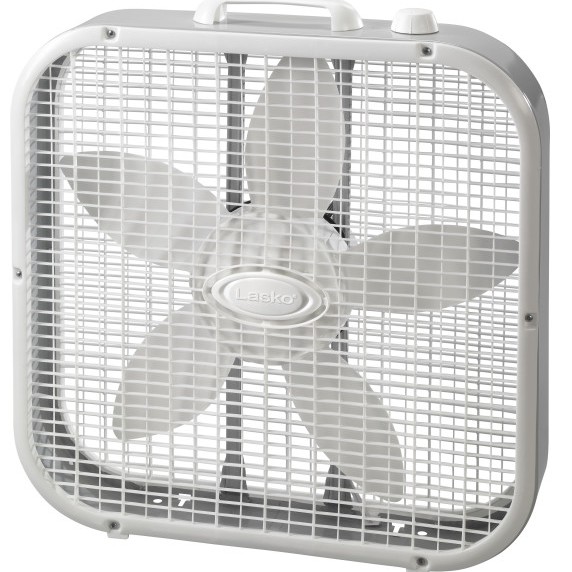
The EPA has studied these directly and endorses them, which surprises people: “Several studies indicate that well-built DIY air cleaners can perform similarly to commercial portable air cleaners in reducing airborne particles.”
The fan model matters more than the price. The EPA says to “only use certified fans with UL or ETL marking (2012 model or newer).” The Lasko 3733 is confirmed ETL-listed and carries a fused safety plug, which is why it’s listed here, while several other box fans at the same price have no listing at all. If an older fan is the only option, the EPA says, “Do not leave it unattended, and do not use it while sleeping.”
Highlights
- 20-inch three-speed fan moving 1,800 CFM, ETL listed with a fused safety plug
- Construction matters: “designs using shrouds, thicker filters, and multiple filters had higher CADRs”
- The four-filter cube outperforms a single filter taped to a fan
- Shroud cuts from the fan’s own carton at no cost
- EPA frames DIY units as a fallback “only when products of known performance… are not available or affordable”
Price
- Lasko 3733 box fan, $24.98
- Four 20x20x1 MERV 13 filters, $31.96 for the pack, plus duct tape at $7.76
- Full cube, about $64.70 before tax
#6: Forensics Detectors FD-103-CO-LOW, Carbon Monoxide Readings Down to 0.1 PPM
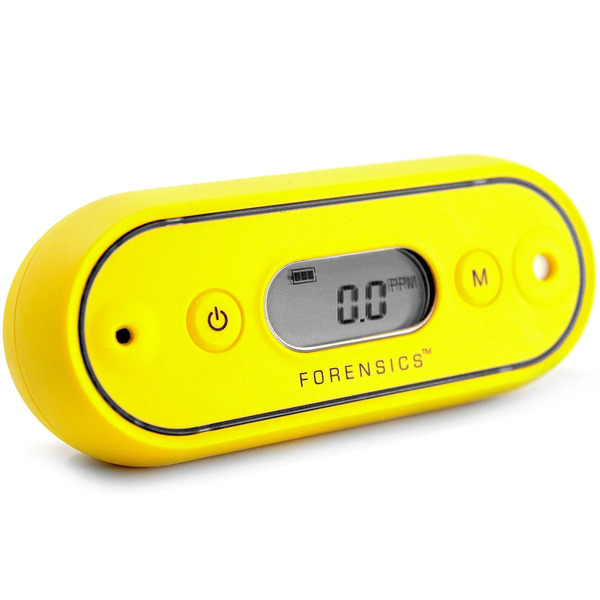
The item nobody thinks about, and the only one here addressing a gas purifier filter removes.
Washington State’s Department of Health recommends that households near a fire “consider using a CO monitor that can detect levels as low as a few ppm,” aiming to keep levels “below an average of 20 ppm over 1 hour.”
A standard residential CO alarm can’t do this. Alarms built to the UL 2034 standard suppress the display below roughly 30 ppm and sound at concentrations far higher. They exist to catch a furnace emergency, not to track days of low-level exposure. Most households don’t need this. Anyone within smoke-visible distance of an active fire does.
Highlights
- Displays carbon monoxide down to 0.1 ppm across a 0 to 100 ppm range
- Clears the “few ppm” bar, Washington State’s guidance asks for, which household alarms do not
- The cheaper FD-D001 alarms at 25 ppm within a minute, against 70-plus ppm and hours of delay on a household alarm, but its display starts at 10 ppm
Price
- Forensics Detectors FD-103-CO-LOW, $185.00
- Forensics Detectors FD-D001, $129.00, if an alarm matters more than a low-ppm readout
How to Size a Purifier, and What CADR Doesn’t Tell You
There’s an official formula, simple enough to use in a store. The EPA says to “choose a PAC with a clean air delivery rate (CADR) for smoke that is at least two-thirds of the room area in square feet.” A 300-square-foot room needs a smoke CADR of at least 195.
Note it specifies the smoke CADR. Not every brand breaks it out. AirDoctor, Coway and Blueair all publish a smoke-specific number. Levoit publishes a single blended CADR covering dust, pollen, and smoke together, which can’t be used here, and Winix publishes no figure a shopper can reach.
Then read the number, knowing what it measures. CADR is an AHAM test that clears smoke particles from a sealed chamber. Nothing in it measures whether a machine removes benzene, formaldehyde, carbon monoxide, or the smell, because gases aren’t particles and the test doesn’t look for them. A purifier can post an excellent smoke CADR with almost no carbon in it. So CADR rates two of the four problems and says nothing about the other two, which makes the carbon stage the second question: pelletized carbon in a filter with real thickness, or a carbon-dusted sheet wrapped around the pre-filter. Most brands don’t publish a carbon weight, which is its own answer.
Coverage needs the same scrutiny. Square footage means nothing without the air change rate attached, and brands pick the rate that flatters them. One air change an hour is not smoke performance. Look for 4 or 5 ACH, and if a listing doesn’t say, assume the generous end.
Run whatever you buy continuously, on the highest setting you can tolerate. A purifier on low in a closed room does a fraction of the work it’s capable of.
Setting Up the Clean Room
The EPA’s central recommendation during a smoke event costs almost nothing to prepare. Pick a room “big enough to fit everyone in your household and comfortable to spend time in,” and the agency suggests “a bedroom with an attached bathroom.” Close the windows and doors, then run a correctly sized purifier continuously, “on the highest fan setting if you can.” A $3.93 roll of Frost King V443H weatherseal closes gaps around an older window, and a 3M 2141-EP insulator kit covers five leakier ones at $16.87. Seal the room, but as the EPA puts it, “don’t do anything that makes it hard to get out.”
Avoid these indoors while the smoke lasts, all named by the EPA and CDC: smoking and vaping, gas, propane or wood-burning stoves, candles and incense, aerosol products, frying or broiling food, and vacuuming.
One tension to handle honestly. Smoke season overlaps with heat season, and Washington’s health department authorizes breaking the closed-window rule when it gets dangerous: “windows may need to be opened periodically if indoor heat levels become a concern,” and “if opening windows to manage heat, make sure it is cooler outside than inside.”
Final Thoughts
Most of what makes a household ready for smoke costs very little and takes an afternoon. Know where to check the AQI. Have respirators in a drawer before they sell out. Put a MERV 13 filter in the system. Decide now which room becomes the clean room, and stock the boring things, medication, food, and spare filters, since filters are the first thing to sell out regionally when a fire starts.
The one decision worth spending real money on is the purifier, because it’s the piece doing continuous work while everything else sits ready. Smoke arrives as ash, fine particles, gases, and odor together, and a machine that handles all four is a different proposition from one that handles particles and lets the rest through. AirDoctor’s UltraHEPA filter is rated to 0.003 microns, its carbon stage is enhanced with potassium permanganate, and a sealed housing that sends every cubic foot through all three stages covers the full mixture rather than part of it.
Buy the equipment on a clear day. The week the smoke arrives is the week everyone else is looking for it, too.
Check out similar brands you might find useful:



Ask the community or leave a comment
WRITE A REVIEWCustomer Reviews
Leave a review