Kincmo vs Hunter Douglas: Which Motorized Shades Are Worth Your Money?

Motorized shades used to mean one thing, which was a consultation, a quote, and a four-figure invoice. Hunter Douglas has been at the top of that market since 1919 and effectively wrote the category, with the honeycomb cellular shade as its own 1985 invention. Kincmo sells the same basic idea through a website, at prices that look like a rounding error next to the same product from a dealer.
The gap is wide enough to be suspicious, so the useful question is what the extra money buys. Some of it is real engineering, some is a fabric library no direct-to-consumer brand can match, and some is the cost of a dealer network standing between you and the product. The breakdown below separates those out.
Table of Contents
About Kincmo
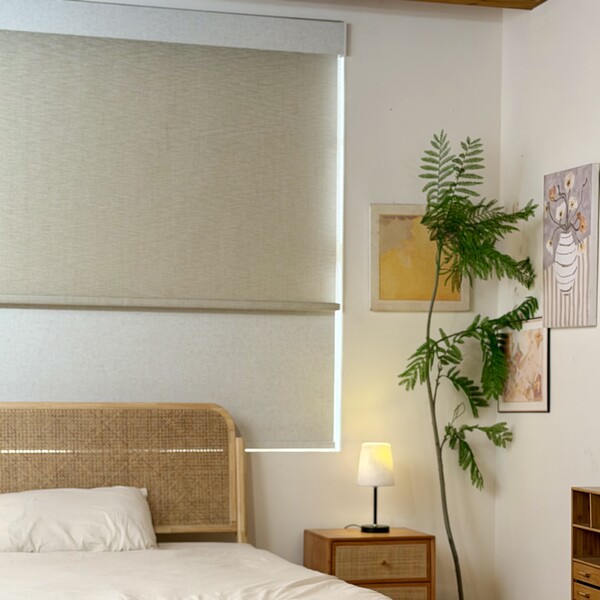
Kincmo sells motorized window shades directly through its own site, with cellular shades and dual shades as its two headline lines. All shades are made to your measurements, ship free worldwide with no minimum order, and arrive ready for a DIY install, which the brand describes as a five-minute job with no tools.
What separates it technically is the motor. Kincmo offers a Matter over Thread option that pairs by scanning a QR code and works with Apple Home, Amazon Alexa, Google Home, and Samsung SmartThings without a proprietary bridge in the middle. A standard motor tier is also sold, which is remote-only unless you add Kincmo’s own Matter Hub covering up to 30 shades.
About Hunter Douglas
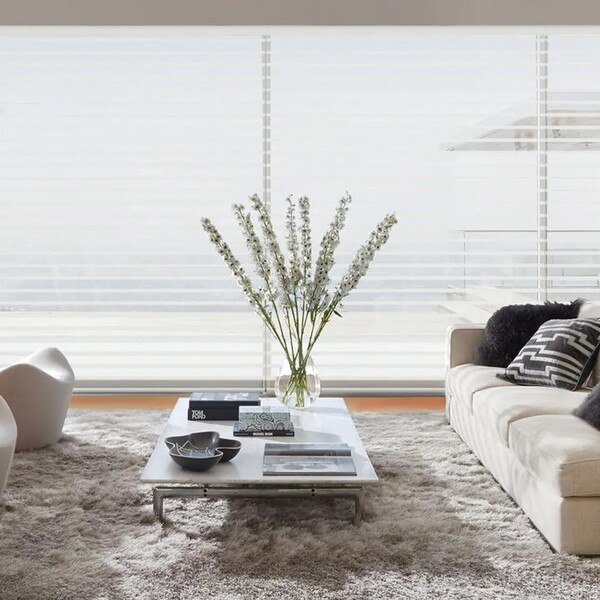
The other side of this comparison is the company that invented most of the category.
Hunter Douglas has been in business since 1919 and now runs from Rotterdam with US operations in Broomfield, Colorado. 3G Capital took a controlling 75% stake in 2022 in a deal valued at around $7.1 billion. The company also owns Levolor, 3-Day Blinds, and Select Blinds, which is worth knowing, since the Hunter Douglas brand itself stays deliberately offline while its sister brands sell directly.
Its product history is the pitch. The Duette honeycomb shade arrived in 1985 as the first energy-efficient cellular shade, Silhouette followed in 1991, and PowerView motorization launched in 2015 and reached its third generation in 2022. Duette alone comes in 164 colors across 16 fabric collections, some with more than 50% recycled content.
There is one way to buy one. Hunter Douglas states that its branded window treatments are not sold online and are available exclusively through a network of trained specialists who consult, measure, and install. There is no DIY path and no published price.
What to Consider
Either brand will put a motorized cellular shade on your window, so the decision comes down to what surrounds that shade. What you pay and what is bundled into it, how the motor talks to the rest of your house, who measures and installs, how deep the fabric range runs, and what happens in year three all pull in different directions. Here is how each handles them.
1. Price and What You Pay in Total
Motorized shades get priced in two different ways across this category, and the difference is easy to miss until checkout. Some brands fold the motor, the remote, and app control into the shade price. Others quote the shade on its own and add each of those as a separate line, along with measurement and installation.
What follows is what each brand charges for a comparable motorized cellular shade and where the extras sit in each case.
Kincmo
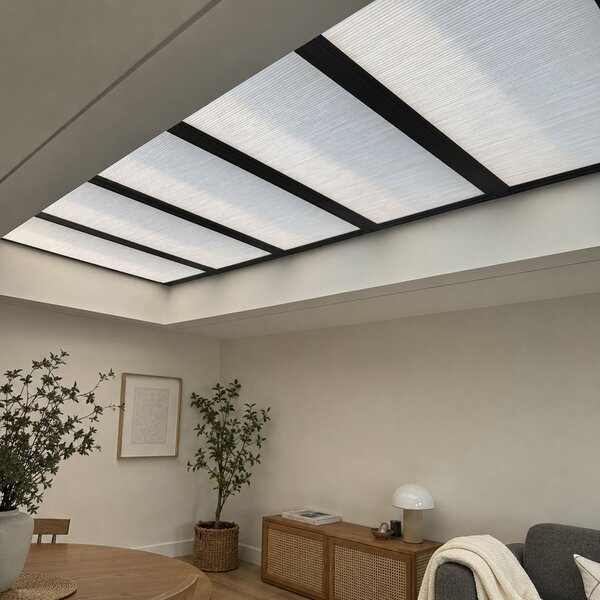
Prices are published on the site, which is itself part of the answer. A 100% blackout motorized cellular shade lists at $169.99, the light-filtering version at $159.99, and the double-cell blackout at $189.99. Top-down bottom-up versions run from $239.99 to $269.99, and the Day & Night cellular, which switches between a light-filtering and a blackout layer, sits at $299.99. Dual shades start at $299.99. Motorization, remote, and app control are in those numbers rather than added to them.
Those are starting points. Kincmo reports a typical customer order landing between $300 and $500 per shade once real window dimensions go in, and everything sits inside that number. Motor, remote, app control, no separate line items. The review site MacSources configured a fully loaded set with a higher motor tier and a hub added, and still landed at roughly $428 a shade.
Hunter Douglas
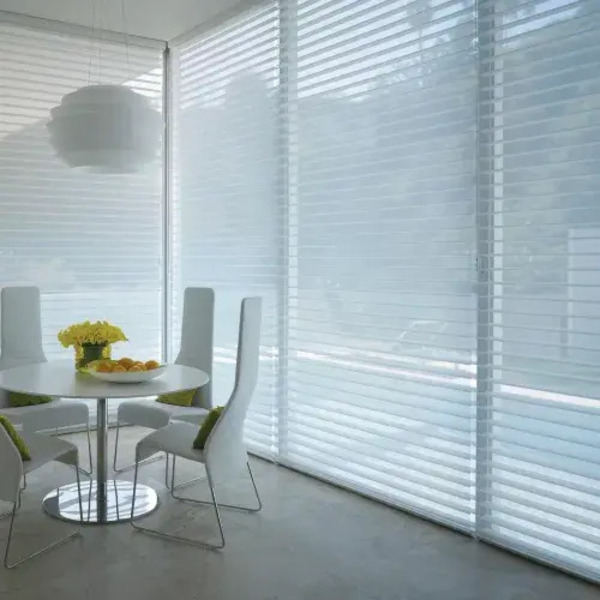
Hunter Douglas publishes no prices at all. Its product pages say cost depends on size, fabric, control option, and any add-ons, and direct you to a consultation. What exists in public comes from dealers and reviewers. TechHive lists Duette shades with PowerView Gen 3 starting at $772 per shade. Dealer-published ranges put motorized Duette cellular at $700 to $950, with battery motors adding $300 to $400 per shade and installation labor running $125 to $150 per motorized window.
The accessories carry their own line items. The PowerView Gateway is $195, the Gateway Pro is $350, a Pebble remote is $85, and a spare battery wand is $80.
Verdict
Kincmo takes this, and one window shows why. Put a standard bedroom opening, roughly 36 by 60 inches, in front of both brands and ask for a motorized cellular shade. Kincmo lands in the $300 to $500 a typical order runs, with the motor, the remote and app control already inside that number. Hunter Douglas starts at $772 for a Duette with PowerView Gen 3 on TechHive’s figure, dealer ranges reach $950 before anything is fitted, installation adds $125 to $150 per motorized window, and the gateway is another $195 if you want voice control. Call it $900 to $1,300 on the same window.
Same shade, same window, and the difference buys two more Kincmo shades and a hub. Hunter Douglas puts a specialist on your ladder for that money. A rectangular bedroom window does not need one.
2. Smart Home and Motorization
A motorized shade has to talk to something, and how it does that decides what you can automate and what else you have to buy to get there. Three questions do most of the work. Which protocol the motor speaks, whether a brand-specific hub sits in the path, and how loud the thing is when it runs at six in the morning. The two systems answer those differently, and the answers pull in opposite directions.
Kincmo
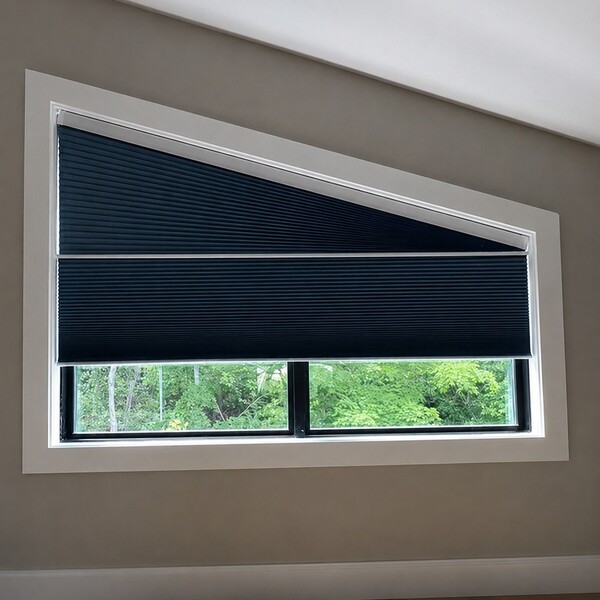
The Matter over Thread motor connects natively. You scan a QR code, and the shade joins Apple Home, Alexa, Google Home, or SmartThings directly, provided your house already has a Thread border router, which most homes with a recent HomePod or Nest speaker do. No brand-specific bridge sits in the path. The standard motor tier is the exception and needs Kincmo’s own hub for anything past the remote, so the motor tier you pick counts for more than the shade you pick.
Kincmo states operation under 28 decibels, though it publishes no test method. It also publishes no battery life figure, no capacity, and no charging time anywhere on the site, which is a real gap on a product that runs on a rechargeable battery.
Hunter Douglas
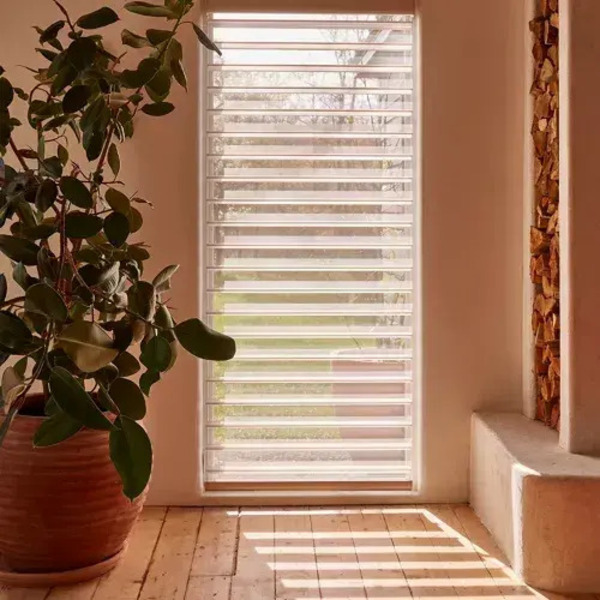
PowerView Gen 3 is a mature and well-engineered system. It runs Bluetooth 5.0, stores automations in the shades themselves so schedules survive an internet outage, and reports position eight times a second. TechHive measured it at just 5 decibels above background in a quiet room, against 12 for a competitor, which is an independently verified result rather than a marketing claim.
The integration story is less modern than the price suggests. Matter support arrived in July 2025, but it runs through the Wi-Fi gateway rather than over Thread, and Thread is not supported. Voice control, remote access, and every third-party integration require a gateway starting at $195. Gen 2 shades cannot join a Gen 3 system, so anyone who bought in before 2022 runs two hubs and a split app.
Verdict
Kincmo has the better architecture; Hunter Douglas has the better hardware. Native Matter over Thread with no proprietary bridge is where the industry is heading, and Hunter Douglas is bridging to Matter over Wi-Fi through a paid gateway instead. Against that, PowerView is quieter by the only measurement anyone has independently taken, and it publishes a battery life figure where Kincmo publishes none. Anyone building a Matter house should lean on Kincmo. Anyone who wants the quietest possible motor over a bedroom should note the measurement.
3. How You Buy and Who Installs It
Window coverings are made to measure, which makes the buying process part of the product rather than a step before it. One route asks you to measure your own openings and mount the brackets yourself. The other sends a specialist to do both. The tradeoff runs between cost, time, and how much risk you carry if a number turns out wrong.
Kincmo
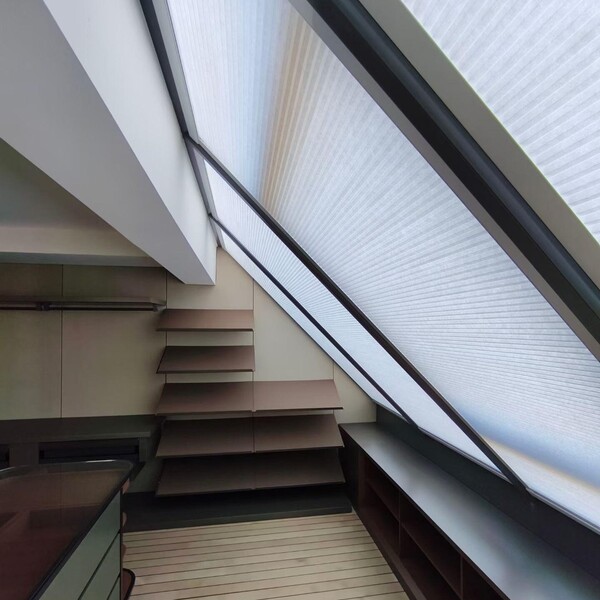
Orders run entirely online. You measure your own windows, order the exact opening size for an inside mount, and Kincmo deducts an eighth of an inch. Cellular shades cover widths from 20 to 115 inches and heights from 15 to 130 inches, with a 1.6-inch minimum frame depth. Dual shades need a deeper 2.6-inch recess, which is worth checking before ordering. Fabric swatches cost $0.59 to $0.99 rather than being free.
Installation is simple for an independent account. MacSources reported that once the brackets were up, the shade snapped into place. Kincmo’s shipping policy states that production and packaging typically take 2 to 5 business days, with delivery generally expected within 4 to 6 business days after order confirmation. Actual transit times may vary by location.
Hunter Douglas
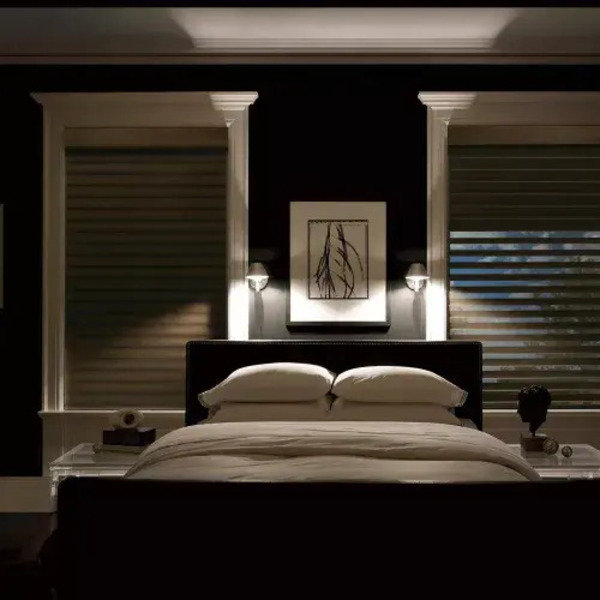
A specialist visits, consults on fabric, measures, and installs. Nothing changes hands at the visit, which is not the same as free. Dealer-published figures put installation labor at $125 to $150 per motorized window, and the rest sits inside a quote you cannot see until you have booked a consultation, hosted a salesperson and waited for a callback. You pay for that service either way. The only real question is whether your window is complicated enough to need it.
Verdict
Kincmo wins for most straightforward windows, while professional installation still makes sense for unusual sizes, shapes, or whole-house projects. Its optional Measurement Protection & Assurance also reduces the risk of measuring yourself, covering the cost of remaking the shade if incorrect measurements require a replacement. The protection adds roughly 2.2% to the order total, giving DIY buyers more flexibility without automatically paying for professional installation.
4. Fabric Range and Product Depth
Cellular shades vary more than they look from across a room. Cell count, pleat size, fabric composition, and the way a honeycomb traps air all change how a shade insulates and how it handles light at the edges. Catalogue depth decides something simpler, which is whether a brand can match an unusual room at all. Here is what each offers, and just as usefully, what each publishes about it.
Kincmo
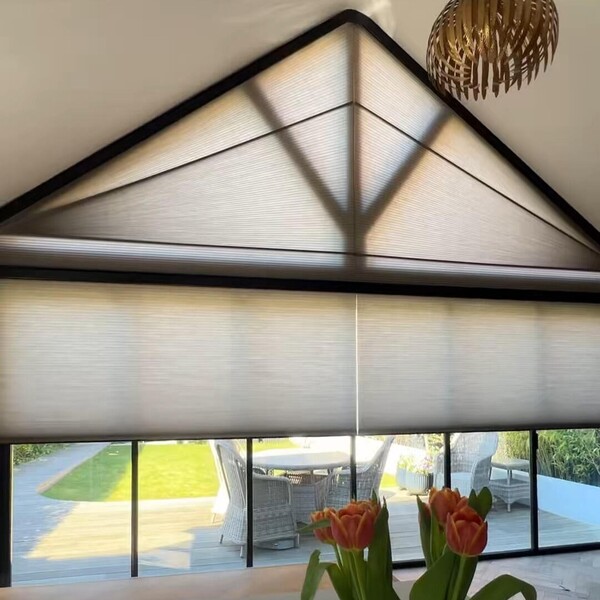
The range is focused rather than broad. Cellular shades come in eight colors on single-cell products and four on double-cell, with seven on the Day & Night. Dual shades, zebra shades, roller shades, and solar shades round out the catalogue. Fabric composition is not published, and neither is cell size, so there is no way to compare a Kincmo honeycomb against a named competitor’s on specification.
Hunter Douglas
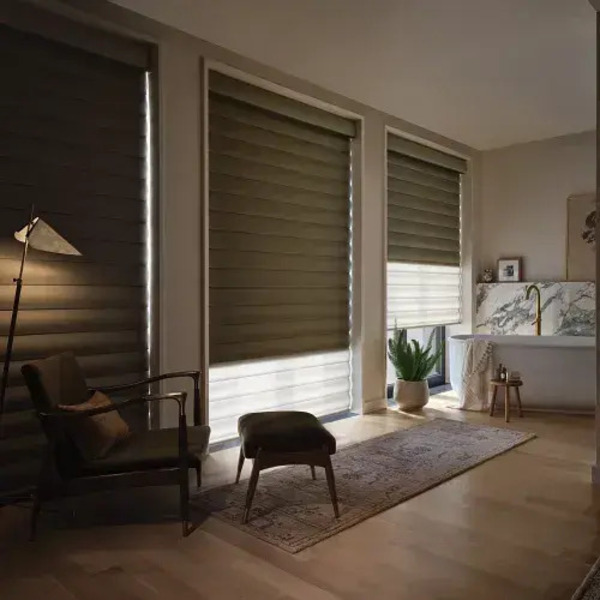
Duette alone offers 164 colors across 16 fabric collections, some using more than half recycled content, in 3/4-inch and 1 1/4-inch pleats. Duette Architella uses a honeycomb-within-a-honeycomb construction, and LightLock adds side channels with micro-ridges built to absorb stray light at the edges. Beyond cellular, Silhouette and Pirouette use fabric vanes suspended between sheers, a construction with no equivalent anywhere at any price.
Hunter Douglas also publishes real performance data. Its architectural spec sheet lists R-values from 1.60 to 2.60 for Duette depending on pleat size and glazing, along with UV blocking of 95% to 99%, and Duette Architella carries federal energy tax credit certification.
Verdict
Hunter Douglas takes this outright, and it is not close. Kincmo makes energy claims like cutting 60% of heat without publishing a test method or an R-value, while Hunter Douglas publishes both in an architectural document. Add a fabric library twenty times deeper and two product lines nobody else can legally copy, and this is what the premium pays for.
5. Warranty and Long-Term Support
Warranties on motorized shades cover two different things, and the headline number usually describes the easier one. The shade body and the fabric are one question. The motor, the battery, and the labor to swap them out are another. Worth reading which parts a policy names and for how long, since the motorized parts are the ones that tend to fail first.
Kincmo
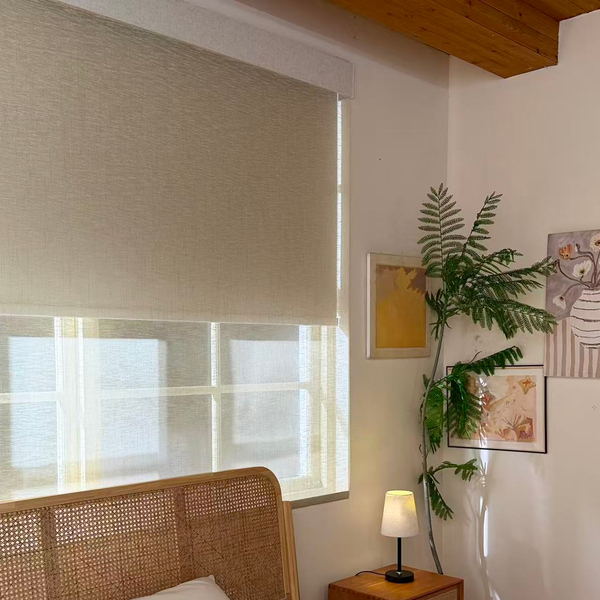
Coverage runs two years from purchase for the original purchaser, covering the motorization system, fabric against fading or damage, and brackets and components against material defects. Extensions are sold separately at $29.99 for a third year, $39.99 for a fourth, and $49.99 for a fifth. Exclusions include improper installation, accidental damage, coastal environments, and normal wear.
Hunter Douglas
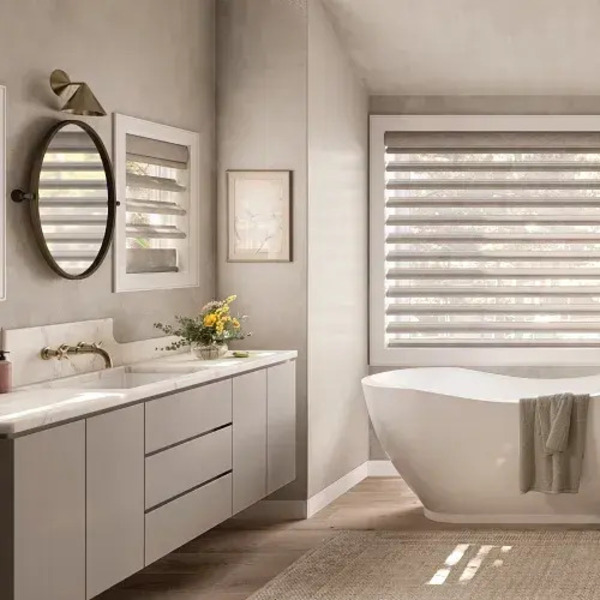
The headline is a lifetime limited warranty, and the shade body does carry it, covering defects, failure to operate, internal mechanisms, brackets, and fabric delamination. Read further, and the picture narrows. Operational cords are covered for seven years, motorized components for five, and labor, removal, and reinstallation are not covered at all. The motorized warranty is for the original owner only.
Reported experience is mixed. BBB reviews for Hunter Douglas run 1.18 out of 5 across 34 reviews, with recurring themes of warranty claims reclassified as normal wear, long support hold times, and replacement motors discontinued for older models. One customer was quoted $460 per shade to remake an out-of-warranty Duette.
Verdict
Hunter Douglas has the longer number on paper. Look at what it leaves out. Labor, removal and reinstallation are all outside it, motor coverage stops at five years, and it transfers to nobody. BBB reviews sit at 1.18 out of 5 across 34, with warranty claims reclassified as normal wear a recurring complaint, and one owner was quoted $460 to remake a single out-of-warranty Duette.
Kincmo reaches that same five years on the component that actually fails, for $49.99, and at the $300 to $500 a typical order runs, a brand new shade costs less than that remake quote. The lifetime coverage is on the part least likely to break.
6. Purchase Risk and Returns
Made-to-measure products sit outside the return rights that cover most online purchases, which changes what protection means here. The useful question is less about a return window and more about what happens when a window gets measured wrong, and who ends up paying for it. The two policies are worth reading side by side before ordering anything.
Kincmo
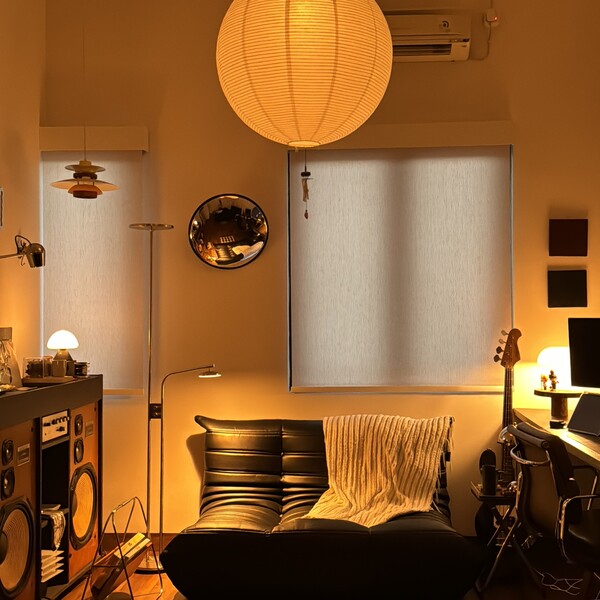
Custom shades generally cannot be returned, but Kincmo’s exchange policy distinguishes between quality issues and customer preferences. If a shade arrives defective, damaged, or incorrect, Kincmo covers the associated shipping costs and offers a free exchange or repair when reported within 24 hours. For exchanges due to personal preference, such as a different fabric or unsuitable size, a handling fee applies to cover production and shipping costs. Kincmo also offers optional size insurance, which can cover the cost of remaking a shade if incorrect measurements require a replacement.
Hunter Douglas
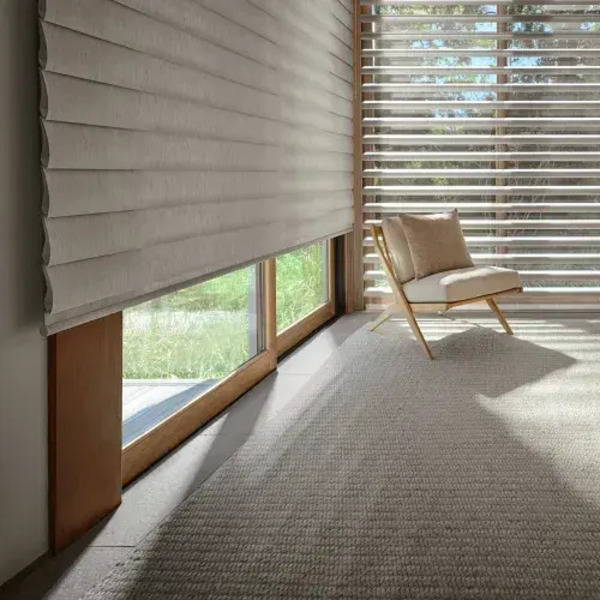
The policy is the same in substance. Custom window treatments cannot be returned or exchanged unless defective under the warranty, with no satisfaction-based return path and no stated window. Claims route back through the dealer who sold them.
Verdict
Kincmo takes this outright. Custom window coverings are final sale across the whole category, and Hunter Douglas offers no satisfaction return whatsoever. Claims route back through whichever dealer sold them. Kincmo is the only one of the two that sells you a way out. Measurement protection at checkout runs about 2.2% of the order, so roughly eleven dollars covers a full remake on a $500 shade if the numbers come out wrong. One brand hands you a phone number. The other hands you a policy.
Kincmo vs Hunter Douglas: What Do Customers Think?
Reviewers on both sides have installed these shades and lived with them for a while, which tends to surface the things a spec sheet leaves out. Here is what those accounts pick up on.
Kincmo
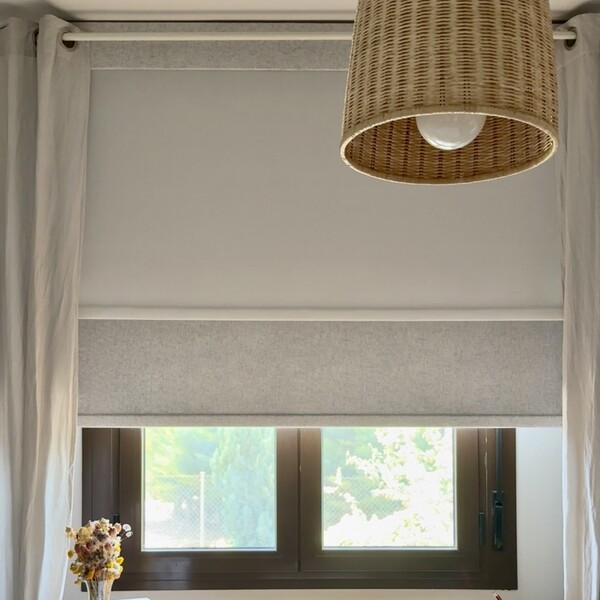
Independent coverage keeps landing on how straightforward the shades are to get up and running. Reviewing the motorized roller shades for MacSources in April 2026, Robyn found the setup unremarkable in the best sense, writing that “The instructions they come with are easy to follow and the main assembly of the shade simply snaps onto a wall-mounted bracket.”
What came through more strongly was how the shades behaved once they were in. She singled out scheduling them around daylight as her favorite part of running them through a smart home, and closed on the look rather than the technology: “The biggest takeaway is how much they change the feel of the room without drawing attention to themselves.”
Hunter Douglas
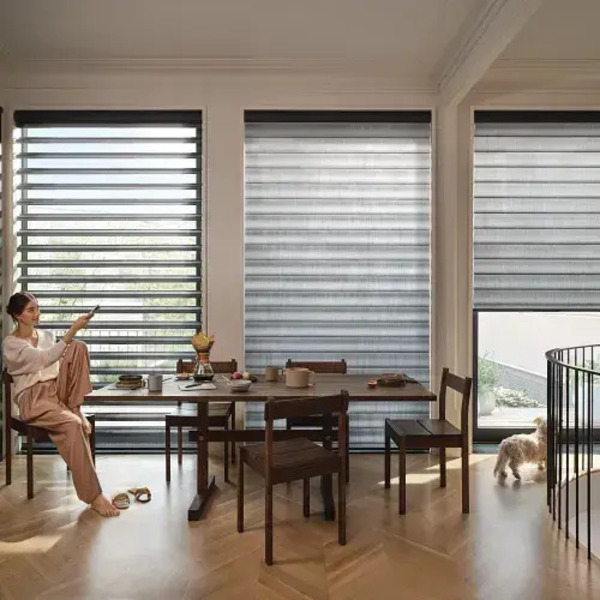
Coverage of PowerView Gen 3 comes mostly from installers and automation reviewers, so it concentrates on how the system behaves inside a wider connected home. Writing for Residential Systems in February 2023, John Sciacca noted how much faster the setup had become between generations: “Setup time for an average shade project is just 15 minutes with Gen 3, down from around 45 minutes with Gen 2.”
The part he kept returning to was precision. Gen 3 reports each shade’s exact position back to the app and to any control system it is tied into, so what the screen shows and what the window is doing stay in step. “Now you are given precise, real-time updates and display of each shade’s position with an adjustment slider or ability to enter a numeric percentage,” he wrote.
Kincmo vs Hunter Douglas: Promotions and Discounts
Neither brand expects you to pay a list price, though only one lets you see what that price is.
Kincmo
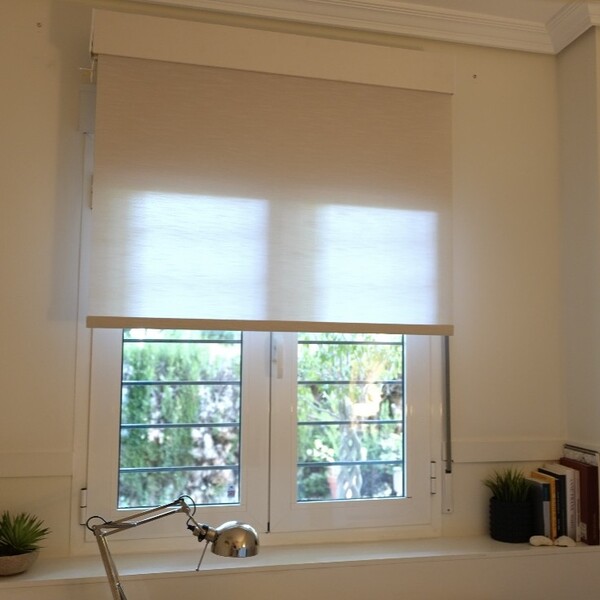
- Every shade sits at a standing discount against a compare-at price, generally 20% to 28%
- Orders of $500 or more can get an additional 12% off with code HBRB12
- A buy 10 shades, get 1 free offer runs for whole-house orders
- Email signup advertises up to $560 off
- Fabric samples are discounted to $0.59 to $0.99
- Free shipping worldwide with no minimum order
Hunter Douglas
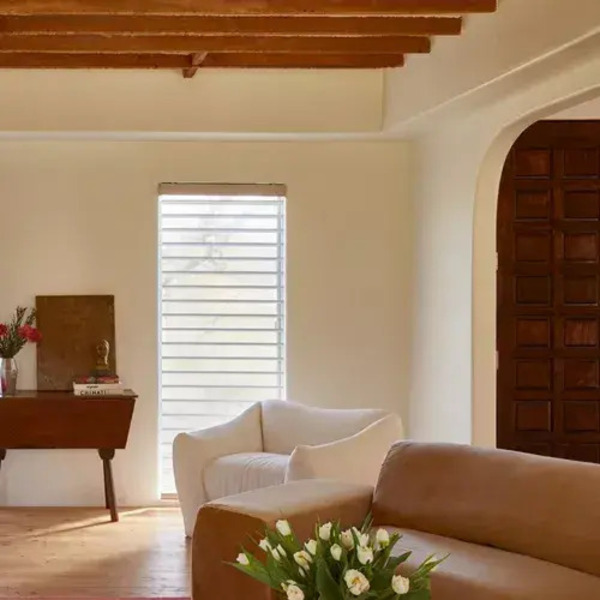
- Prices come from a dealer quote, so discounts are negotiated rather than published
- A Best Price Promise is advertised, with terms not published
- Rebate promotions run periodically through dealers
- Duette Architella carries a federal energy tax credit certification, which functions as a real discount at filing time
Verdict
Kincmo edges this, though partly by default. Published pricing with a visible discount is easier to act on than a quote you have to request, and free worldwide shipping with no minimum is unusually generous. The tax credit on Architella is the one Hunter Douglas advantage with real dollars behind it, and it applies only to a specific product line.
Kincmo vs Hunter Douglas: Shipping and Returns
What happens between the order and the window is where the two brands work completely differently.
Kincmo
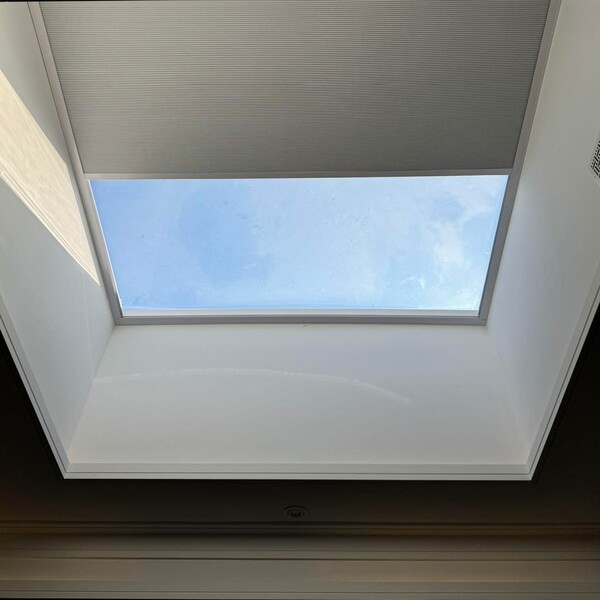
Delivery is free to the US and worldwide with no minimum, via UPS, FedEx, DHL Express, or USPS. Kincmo’s shipping policy puts production and packaging at 2 to 5 business days and delivery at 4 to 6 business days after order confirmation, so figure on roughly 6 to 11 business days start to finish. The brand also reimburses customs duties. Returns follow the custom-order policy above, with defects reportable within 24 hours of arrival.
Hunter Douglas
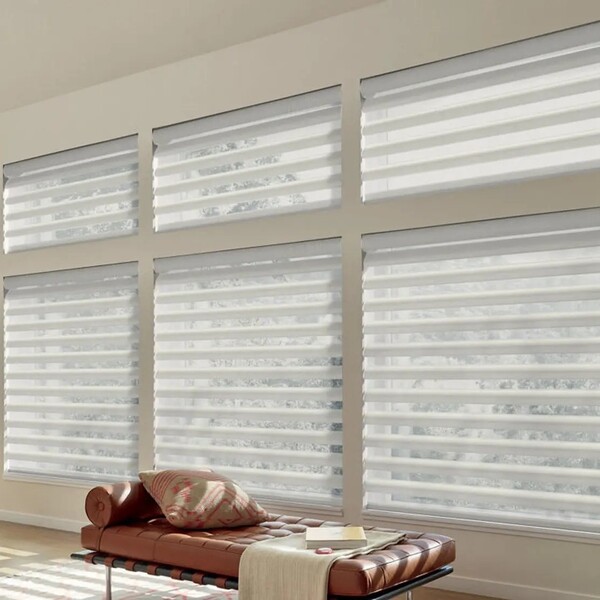
There is no shipping in the consumer sense, since the dealer delivers and installs. Lead times are not published by Hunter Douglas or its dealers in any source I could verify, so ask during the consultation rather than assuming. Returns are limited to defect claims routed through the selling dealer.
Verdict
Kincmo takes this comfortably. Free worldwide shipping with no minimum beats a dealer-scheduled delivery and install appointment, and roughly 6 to 11 business days from order to doorstep is quick for a made-to-measure product. Hunter Douglas publishes no lead time anywhere, so that’s a question for the consultation.
Who Will You Shop With?
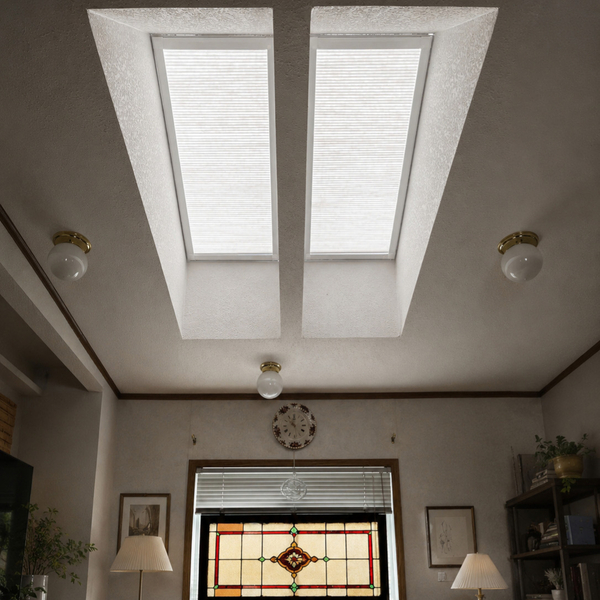
Kincmo is the right call for most people covering ordinary windows. A rectangular opening with a normal recess does not need a specialist visit, and paying four to five times more, plus installation labor to cover one, is money spent on a service the window does not require. The Matter over Thread motor is a better fit for a modern smart home than a bridged gateway, the published pricing lets you plan a whole house before speaking to anyone, and the arithmetic on a ten-window job lands somewhere a Hunter Douglas quote can’t reach. Measure carefully, and if you’d rather not carry that risk yourself, the measurement protection runs about 2.2% of the order.
Hunter Douglas earns its price in specific situations rather than generally. Arched, oversized, out-of-square, or deeply recessed windows benefit enormously from professional measurement, and so does a large job where one error is expensive. Anyone who wants Silhouette or Pirouette has nowhere else to go, since nothing comparable exists at any price. And anyone who values 164 fabric choices, published R-values, a federal tax credit, and a lifetime warranty on the shade body is buying real things rather than a badge.
The deciding question is what kind of windows you have and how much of the process you want to run yourself. For standard windows and a willingness to measure, Kincmo delivers most of the outcome for a fraction of the spend.
Final Thoughts
Motorized shades have split into two markets that barely overlap in price. One sells through dealers with measurement, installation, and a century of fabric development behind it. The other sells online at a price that assumes you own a tape measure.
Kincmo wins on price, on smart home architecture, and on how easily you can order and fit the thing. Hunter Douglas wins on fabric depth, on published performance data, and on a warranty that outlasts most mortgages. Neither result is close enough to argue with, which is what makes the choice straightforward. Most windows are ordinary, and for those, the extra several hundred dollars per shade buys a service the window did not need.
Remodeling your home? Check out related reviews you might find useful:



Ask the community or leave a comment
WRITE A REVIEWCustomer Reviews
Leave a review