Fresh Dog Food vs Kibble: Which Is Better for Your Dog?

Two bowls of dog food can list the same ingredients and be almost nothing alike. The kibble went through a process that reached 200°C. The fresh food was gently cooked and quickly frozen. What happened between the ingredient list and the bowl explains most of the difference, and almost none of it shows up on the packaging.
Around 80% of dog owners feed kibble, and that’s a perfectly sound decision. It’s affordable, it lasts for months in a cupboard, it travels, and it’s sold everywhere. Millions of dogs live long, healthy lives on it. Plenty of those owners have never had a reason to look at anything else, which is all this article is for.
That means starting with how each one is made, then what the research does and doesn’t show, and then how to work out which suits your dog. There’s a decent case for both, and we’ll say so where there is.
Table of Contents
About Fresh Dog Food
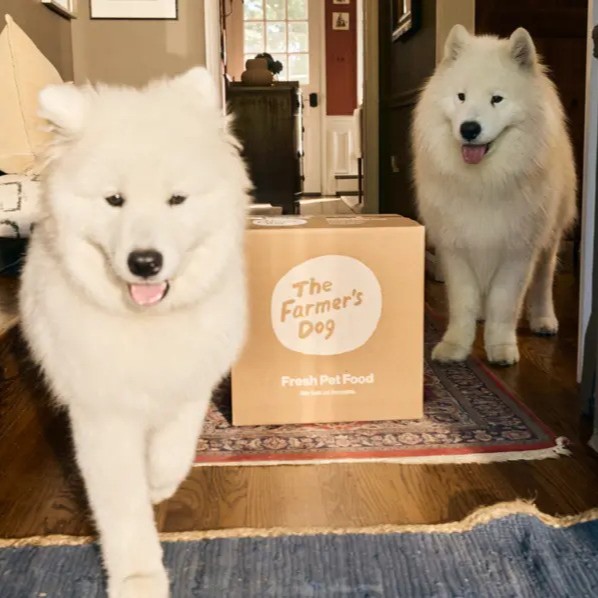
The whole difference comes down to two things: temperature and moisture.
Fresh dog food starts from whole meats and vegetables, gently cooked at low temperatures. Hot enough to kill pathogens, nowhere near what kibble goes through. It’s then quickly frozen, which preserves it without stripping the water out or adding preservatives. It arrives frozen and thaws in your fridge, the way you’d handle food for yourself.
Two things follow. The moisture stays in, roughly 71% against kibble’s 6%. And the protein is exposed to lower heat, so less of the change described in the next section happens to it.
One warning about the word itself, because it gets used loosely. Some products marketed as fresh are still made to animal feed standards. Food made to human-grade standards is produced in facilities that handle human food, under human food rules. The label word alone won’t tell you which one you’ve got, and the gap between the two is wide.
About Kibble
Most dry dog food on the shelf is made the same way, and that one process explains a lot of what follows.
Kibble is made by extrusion. Ingredients are mixed into a dough with water and steam, moved through a heated barrel, and shaped through a die. The drop in pressure puffs the dough into the pieces we recognize, and those are dried and cooled. It’s an efficient piece of engineering, and it’s why kibble can be made at a scale and a price that nothing else in the category comes close to.
Published research puts the process at temperatures reaching 200°C, followed by a drying stage. The finished product lands around 6% moisture, which is what lets a bag sit in a cupboard for months without spoiling. That shelf life isn’t a side effect. It’s the design goal, and it’s a genuinely useful one.
The tradeoff sits with protein. Exposure to high heat is the same chemistry that browns a steak, and in manufacturing, it can bind some amino acids into forms a dog absorbs less easily. Manufacturers have known this for decades and formulate around it, setting nutrient levels high enough that the finished food still meets requirements.
What to Consider?
Six things separate the two, and they cover very different ground. Some are about what happens inside the dog, like how much of a meal gets absorbed and how much water comes with it. Others are about what happens in your kitchen, like the monthly bill and whether there’s room in the freezer. In the six sections below, we look at fresh food, then kibble, then land somewhere.
1. Digestibility
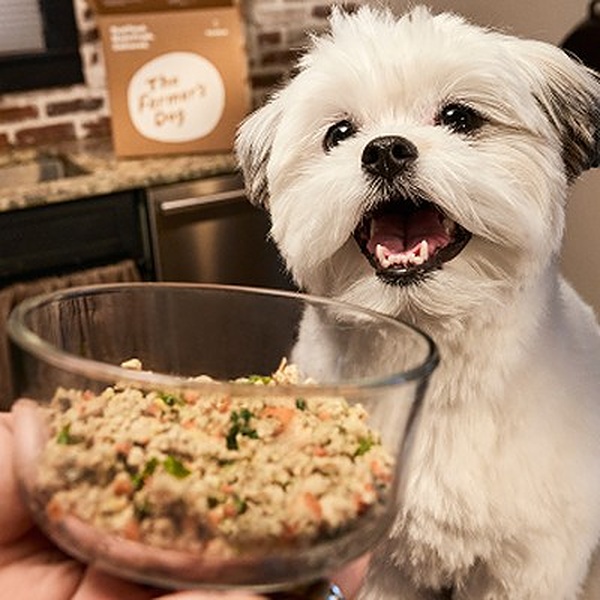
How much of dinner does a dog get to use, and how much just passes through? That’s digestibility, and it tends to be the first difference owners notice, mostly because it shows up in the yard.
Fresh Dog Food
Researchers at the University of Illinois compared five types of dog food in adult dogs. The mildly cooked fresh diet came out ahead of kibble on each measure they took, with protein digestibility around 86% against about 82% for the kibble. Another team looked specifically at human-grade fresh food and found more than 90% absorbed, with less waste and less total food needed to hold a steady weight.
Read those with one caveat, though; the foods being compared differed in more than how they were cooked, and some of that work was funded by fresh-food companies.
Kibble
Kibble came in lower on those measures, and it’s worth being precise about how much lower. Around 82% of the protein was still absorbed, which is a solid number by any standard. The difference is real, though it’s a difference of degree rather than a pass and a fail.
Where it shows more plainly is volume, since less absorption means more output. Recipes are formulated with those losses accounted for, so a dog eating kibble isn’t going short on anything. It just takes a little more food to get there.
Verdict
Fresh food, on the weight of the evidence, though the margin is narrower than the framing usually suggests. What gives it weight is that independent labs keep landing in the same place.
2. Moisture
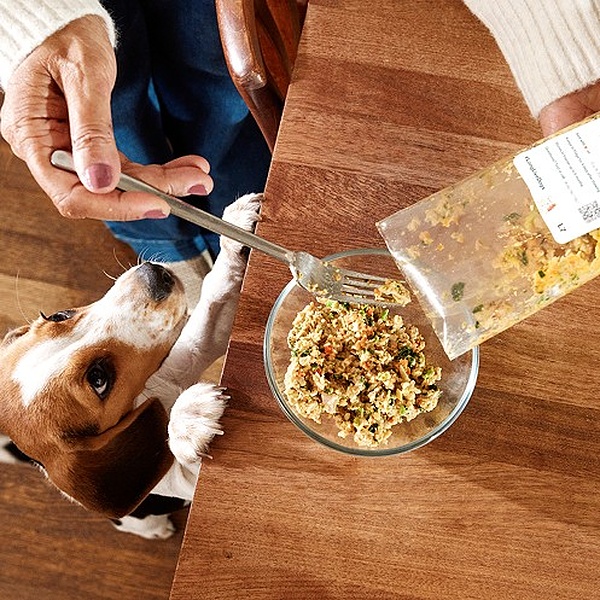
Watch your dog’s water bowl for a week, and you’ve got most of this section already. Dogs need a certain amount of water a day, and there are only two places it can come from.
Fresh Dog Food
Fresh food runs around 71% moisture, so a good share of the day’s water arrives with dinner rather than having to be drunk separately. Published research found that dogs on fresh food cleared their daily water requirement comfortably, taking in about 20% more water overall than the kibble group, and doing it while drinking less from the bowl.
Kibble
A dog eating kibble takes in about 6% moisture at mealtime and has to make up the rest at the bowl. In that same research, the kibble group still met their daily requirement, just with far less margin. For a dog who isn’t much of a drinker, that margin is the whole point.
Verdict
Fresh food, though the honest driver here is moisture rather than freshness; a second part of that same research put canned food ahead of fresh on water intake. Any high-moisture food gets a dog to roughly the same place.
3. Portion Control and Weight

How food gets measured out sounds like a footnote next to what’s in it. The research says otherwise, and this is the part we’d push hardest on, since maintaining a healthy weight is a strong longevity booster. Lean dogs can live up to 2.5 years longer. That comes from a 2019 study of around 51,000 dogs, and the “up to” is doing real work in that sentence, because the gain was much larger for some breeds than others.
A separate long-running study of Labradors found the leaner group lived about 1.8 years longer than their littermates. Neither study is about fresh food. They’re about body condition, which is precisely what portioning controls. Results may vary from dog to dog.
Fresh Dog Food
Fresh-food plans arrive pre-portioned, each pack holding a single day’s food worked out from a dog’s age, weight, breed, body condition, and activity level. The pack is the measurement, so nobody’s estimating anything. One distinction gets blurred often enough to be worth stating plainly: the plan is personalized, the recipes are not. You get a complete and balanced recipe portioned for your dog, not a formula built to order.
Kibble
Kibble gets portioned with a scoop against a weight range printed on the bag, which is a rough estimate twice over. Scoops vary. The ranges are broad. A little extra each day adds up without anyone noticing, and the not noticing is the problem. A kitchen scale fixes most of it, though only if someone reaches for it every single time, which in a busy house is a lot to ask.
Verdict
Fresh food, and of the six, this is the one we’d act on first. An owner controls portioning in a way they control almost nothing else about a dog’s health; therefore, pre-portioned packs turn the single highest-value habit into the default instead of a daily discipline.
4. Nutritional Standards

“Complete and balanced” is the phrase that decides whether a food can be fed as a whole diet. Either kind can earn it. How they earned it is where the useful information hides.
Fresh Dog Food
Fresh brands vary enormously here, and the word “fresh” on a label guarantees nothing on its own. Some have put recipes through AAFCO feeding trials, the stricter of the two routes. Others take the calculated route. Some employ veterinary nutritionists on staff, and some don’t, so this is one to check rather than assume.
Kibble
Kibble carries AAFCO statements by either route, and plenty of dry foods have completed feeding trials. A feeding trial means real dogs ate the food for six months while their health was monitored; the calculated route means the nutrient levels were worked out on paper. Decades of experience sit behind the category, so age works in Kibble’s favor here rather than against it.
Verdict
A genuine tie, and we’d rather say so than manufacture a winner. Either kind of food can be complete and balanced; therefore, the format on the front of the pack tells you nothing on its own.
5. Cost, Convenience, and Availability
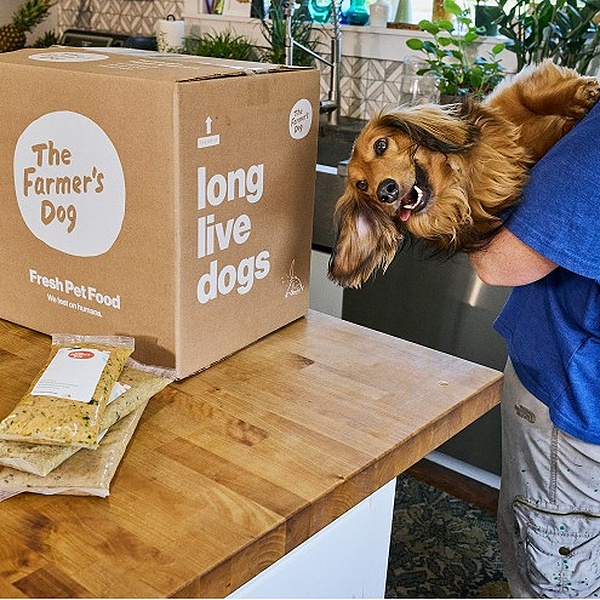
Everything so far has been about what happens inside the dog. Cost and convenience are about what happens in your house, and for a lot of families, they settle the whole question before the science gets a look in.
Fresh Dog Food
Fresh food costs more per calorie, and the gap widens the bigger your dog is. Frozen packs need freezer room and a bit of forward thinking, since tomorrow’s dinner has to come out today. It ships to your door rather than being grabbed on the way home.
Shelf-stable fresh formats have started closing that convenience gap, and feeding fresh as a topper over kibble is a common way to soften the cost, but neither makes the difference disappear.
Kibble
A bag lives in a cupboard for months, needs no freezer space, travels without planning, and can be bought this afternoon at any shop. It’s cheaper per calorie by a wide margin. You can run out on a Sunday night and solve it in twenty minutes. For a large breed on a tight budget, cost on its own is the entire argument, and it’s a good one.
Verdict
Kibble, outright, and it isn’t close. Anyone ruled out by budget or freezer space is making a sensible call, and the habits in the next section will do more for their dog than switching formats ever would.
6. Life Stage Suitability

Puppies, adults, and seniors want different things from a bowl, and both kinds of food have a way of getting there.
Fresh Dog Food
Gentle cooking preserves vital nutrients that can help support immune system function, and fresh food supports healthy skin and glossy coats. Puppies do well on it and can start once weaned, with the plan updating as they grow instead of requiring a switch to a different product. For seniors, the moisture and the easy digestion suit older mouths and older bodies.
Kibble
Puppy, adult, senior, and size-specific formulas have been part of the category for decades and turn up in every shop. A switch between them means buying a different bag, which is about as simple as it gets. Kibble also does a little scraping as a dog chews, although that effect is smaller than dental-kibble marketing would have you believe.
Verdict
Close. Fresh food edges it for seniors, where moisture and easy digestion do the most work; for puppies and healthy adults, either format has solid options, and a plan that updates itself is a convenience win rather than a nutritional one.
Fresh Dog Food vs. Kibble: How to Decide

Forget which format wins in the abstract. The real question is which one fits your dog and your household, and five checks will answer it faster than any amount of label-reading.
Start with your dog’s body condition
If your vet has mentioned weight, or you can’t easily feel your dog’s ribs, portioning is the highest-value change available to you. That points toward pre-portioned fresh food, and it’s the change with the strongest evidence attached.
Be realistic about budget
Fresh food costs more, and for a large dog, it’s a real monthly line rather than a rounding error. A partial switch, fresh food as a topper over kibble, captures some of the benefit for a fraction of the cost. Plenty of people feed that way on purpose.
Check your freezer before you order
Frozen packs need somewhere to live. Measure the space before committing to a plan size. Shelf-stable fresh options exist for households where that’s the blocker.
Read the label, not the front of the bag
Two things on a label tell you more than any photograph. Look for whether the AAFCO statement came from a formulation or a feeding trial. And check whether something calling itself fresh is made to human-grade standards or to feed standards, because the word alone doesn’t separate them.
Transition slowly
Any change of food should happen over a week or so, mixing more of the new into the old as you go. Dogs handle gradual changes far better than abrupt ones, whatever you’re changing to.
If You’re Going Fresh, Here’s Where We’d Start

We’ve kept this comparison about the two kinds of food rather than about any one company, which felt like the honest way to write it. That said, if you’ve read this far and you’re leaning fresh, the obvious next question is whose, so here’s ours.
The Farmer’s Dog is our pick, and the reasons are less about the food than about the system around it. Recipes are developed by on-staff Board Certified Veterinary Nutritionists® to meet or exceed AAFCO and WSAVA guidelines, and three of those nutritionists work at the company, which is uncommon in this category. Production runs in FDA-registered facilities that also make human food.
On the standards question from aspect four, the company says multiple recipes carry the AAFCO feeding trial statement rather than resting on formulation alone, and it ran a multi-year feeding study with the Cornell University College of Veterinary Medicine that went beyond what a standard trial asks for.
On portioning, which is the one we said we’d act on first, packs arrive calculated for each dog and can be adjusted as they grow or as a vet advises.
One disclosure belongs here rather than being buried above. The hydration research in aspect two was funded by The Farmer’s Dog, and its authors work with the company. It’s still peer-reviewed, and the finding stands, but you should know whose money was behind it.
Plans run through thefarmersdog.com, Walmart.com, or Amazon.com, and arrive pre-portioned for your individual dog, whichever route you take. Snap Sticks treats come as a plan add-on from the company’s own site or as a one-time purchase through Amazon or Walmart.
So, Fresh or Kibble?
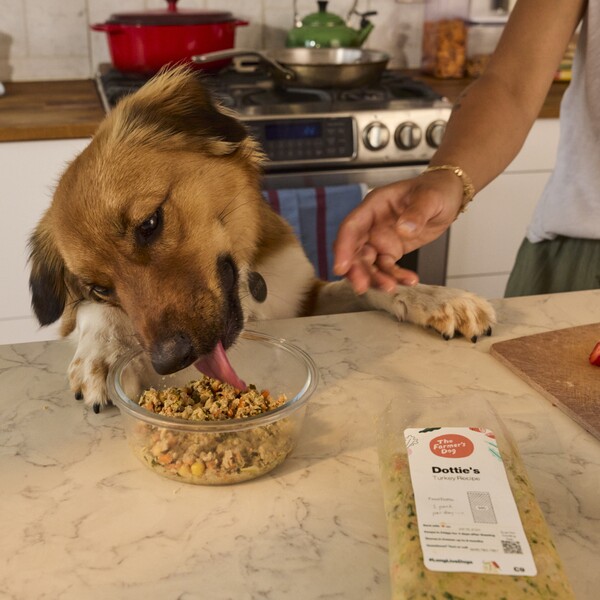
Two bowls, the same words on the ingredient list, two very different routes to get there.
If you’re staying with kibble, the useful move isn’t switching at all. It’s portioning by weight instead of volume, checking body condition every few weeks, and reading the AAFCO statement on whatever you buy. Those three habits cost nothing, and on the evidence, they count for more than the format does.
If you’re going fresh, you’re buying moisture, digestibility, and portions someone else has worked out, and you’re paying real money for it. Whether that trade is worth making depends on your dog, your budget, and your freezer, which is a duller answer than either side’s marketing would like.
What isn’t in doubt is the bit underneath all of it. A dog kept at a healthy weight, on food that’s complete and balanced, is set up well either way.
We also recommend checking out similar dog food brands that you and your pet will also enjoy:



Ask the community or leave a comment
WRITE A REVIEWCustomer Reviews
Leave a review